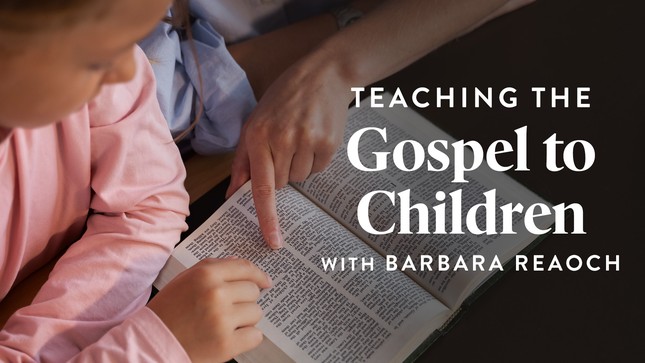

Dannah Gresh: Barbara Reaoch loved teaching parents how to give their kids the gospel.
Barbara Reaoch: Behavior modification techniques are not effective when it comes to changing the heart. Heart transformation is the work of God.
Dannah: This is the Revive Our Hearts podcast with Nancy DeMoss Wolgemuth, author of Surrender: The Heart God Controls, for October 5, 2026. I’m Dannah Gresh.
One of the most important things parents can pass along to their children is an understanding of the Bible, of who Jesus is. Nancy, how did your parents pass that on to you?
Nancy DeMoss Wolgemuth: Oh, wow! There were so many different ways. For sure, I saw in my parents’ lives their heart for God’s Word, their love for biblical doctrine, their love for Jesus. Then there was reading the Bible as a family, family devotions. Both my parents would have told …
Dannah Gresh: Barbara Reaoch loved teaching parents how to give their kids the gospel.
Barbara Reaoch: Behavior modification techniques are not effective when it comes to changing the heart. Heart transformation is the work of God.
Dannah: This is the Revive Our Hearts podcast with Nancy DeMoss Wolgemuth, author of Surrender: The Heart God Controls, for October 5, 2026. I’m Dannah Gresh.
One of the most important things parents can pass along to their children is an understanding of the Bible, of who Jesus is. Nancy, how did your parents pass that on to you?
Nancy DeMoss Wolgemuth: Oh, wow! There were so many different ways. For sure, I saw in my parents’ lives their heart for God’s Word, their love for biblical doctrine, their love for Jesus. Then there was reading the Bible as a family, family devotions. Both my parents would have told you that with seven children at an age range where this was not as consistent or as meaningful always that they would have hoped for . . . I think a lot of parents would say that. But we knew there were times when we would just stop and read the Bible together as a family. Being in gospel preaching, biblically sound churches over the years, that was a huge thing in my life. There was the advantage of a Christian school education, which I’m so, so thankful for!
But you know, one of the pitfalls when we’re trying to pass on biblical truth to children is sometimes a tendency to reduce the message to some simplistic dos and don'ts.
It’s easy to tell kids: “Be good like this biblical character,” or “Don’t be bad, like this biblical character.” But that can really miss the heart of the gospel that says we’re all sinners in need of a Savior!
For many years Barbara Reaoch led the children’s division for Bible Study Fellowship (or BSF). I know that many of our listeners have been involved in that over the years, and now perhaps your children have as well.
Barbara had the heart to effectively pass on the truth of the gospel to children. She gave the message we are about to hear to a group of BSF children’s leaders. When one of our team members heard it, she said “We have got to share this with our listeners!” So that’s what we’re doing today. It applies to parents, and really to anyone who’s teaching children or investing in the next generation—which, by the way, we all should be doing.
Now, since she first shared this message, Barbara has gone home to be with the Lord, but her legacy here at Revive Our Hearts is a sweet one. She was a wonderful author, and she faithfully contributed to the Revive Our Hearts blog. I’m so glad we can continue to learn from her today. Let’s listen.
Barbara Reaoch: The gospel is the most important truth to understand. Listen to how the apostle Paul said it in his letter to the church in Corinth. In 1 Corinthians 15:3–4, Paul says,
For I delivered to you as of first importance what I also received: that Christ died for our sins in accordance with the Scriptures, that he was buried, [and] that he was raised on the third day in accordance with the Scriptures.
This is the gospel. It’s the matter of first importance. It is the most important truth that we can teach a child.
And since the gospel is central to our faith, we must keep it central to our teaching. So here’s some clarification:
- The gospel is not a presentation of the way of salvation.
- The gospel is not a pamphlet of how to receive Christ.
- The gospel is not telling children to “ask Jesus into your heart.”
- The gospel is the truth of God’s plan through Jesus Christ.
It’s the scarlet thread that we see woven through Scripture. Starting in Genesis, we learn of the gospel. And we have it all the way through, chapter by chapter, until we learn about Jesus Christ and see the end of the story.
This is the gospel, and that’s the clarification of it. But here’s the problem: teachers fight against a spiritual enemy who delights in taking the gospel and twisting it so that there’s a subtle deception that often creeps through that we can call “moralism”—an outward conformity to a set of behavioral rules.
So it sounds like this, when we say things like: “Emily, you make God happy when you share the toys,” or “Ryan, God is so pleased with you when you complete your school program lesson each week.”
It kind of sounds like we’re communicating to a child or a student that they’re accepted to God on the basis of what they do and on their good behavior. And the danger is that we end up with little Pharisees! Children who can really learn to be religious.
They can catch it that this is a religious thing and this is what you do to make me happy. But it’s not necessarily that they have a heart transformed by God’s grace through faith in Jesus Christ.
So it is really important for all of us to recognize the difference between teaching that is moralistic and teaching that is gospel-centered. The gospel-centered teaching says that our behavior can never be good enough to make us right with God.
And the gospel-centered teaching says that the gospel is the story of God sending Jesus into the world to be right for us. The gospel is the story of Jesus giving us His righteousness in exchange for our sin.
When the gospel is clear, a child knows that it’s not about feeling good or bad about their behavior that saves—or doesn’t save—or fulfills them, or doesn’t. It is about God and His glorious plan of redemption through Jesus Christ.
So the aim of this talk is to help you clearly understand the difference between moralism and gospel-centered teaching, and to know how to teach the truth of the gospel.
Let’s just start with a little bit of groundwork and remind ourselves what kids are like. What do we know about kids? What do we know that’s in their hearts? Kids love themselves! They love themselves, and their main aim in life is to be happy.
Most of our kids believe that the world does revolve around them. We don’t have to convince them. They believe they are Number One, and anybody who doesn’t think that has a problem!
One family related that they were teaching their four-year-old to understand some basic truths of the Christian faith. They posed the question, “Who is the greatest Being in the universe?” And this little four-year-old, without skipping a beat, said, “Me!”
Kids love applause. We don’t make them idol-worshippers; they already are. They idolize themselves. Now, our system in our world really has analyzed this trait, and they want to feed on it to make kids fulfilled in life.
They think that if we take this trait and build on it in a child, we will actually create little human beings who feel satisfied, successful, confident, and happy. And so, behind all that affirmation, praise—all the trophies that we see for every little thing that a child does today (in our classrooms, on the sports field, in our homes)—is the aim of building our child’s self-esteem.
The second thing we can know about kids is that they measure their worth by comparing themselves to others. They reckon that they are okay with themselves by looking at someone else and saying, “Well, I must be good because I’m not as bad as he is,” or “I must be kinda bad, because I’m not as good as she is.”
And so, they have this sense that they’re trying to measure their own worth, and very often they end up with a sense of inferiority. That is a big problem for, really, all of us. And they work with this by, first of all, becoming very critical of others. This is why we have little tattle-talers.
And with our older kids, well, they have the problem of gossiping—don’t they?—or laughing at each other. They’re dealing with their sense of inferiority through this.
And then, have you ever noticed, that at the same time as they’re pointing the finger at somebody else, they seem to have a very high tolerance of their own faults? They have lots of blind spots.
They’re very defensive about any hint that what they have done is wrong. They have lots of excuses for everything that they do!
Now, the world system concentrates on building a child up, so that when they all reach this point of comparing themselves with others, they will have such a strong sense of feeling good about themselves that they will feel better than others.
The world says don’t ever make a child feel like they are wrong because that leads to a sense of feeling guilty, and guilt will only lead to a greater sense of inferiority.
The next thing is that kids strive to be accepted. They want to be included in the group or the team, whatever it takes. Kids learn very early in life that their behavior determines if they are going to be accepted or rejected by the group.
They quickly learn from you adults whether they are acceptable or rebellious, because they know we put them in either one of those categories right off, as we try to figure out who they are and how we’re going to handle it.
The world system says, “Instead of fighting it, let’s work off this trait and let’s teach kids how to be acceptable by rewarding them when they behave and punishing them when they disobey.” And behavior modification techniques are fairly effective in fixing discipline issues.
The world system may produce moral behavior and at the same time not make any lasting impression on the heart. Behavior modification techniques are not effective when it comes to changing the heart. Heart transformation is the work of God. Only He can change us from the inside so that then comes this maturity and this lasting change of behavior outwardly.
So, how do we teach the truth of the gospel, then? Remember, the world system says that we want our kids to be happy and fulfilled, and the best way to do this is to build up their self-esteem.
Now, we buy into this too. The problem is that a child doesn’t learn that God is the center of the universe when we treat them like they are the center of the universe. Now, of course, we want to encourage them, so please hear me rightly.
But our applause and our exaggerated praise—and all the awards that we might think are going to spur them on—or the fact that we sometimes tell them that they have so many good qualities to offer God . . . When we attempt to encourage them in those ways, it’s really not helping them to get to the issues that are in their hearts.
Sometimes we unwisely message things like: “When you become a Christian, God will help you to be all you want to be.” We hope that will attract them to God, but in their minds God becomes One who exists to give them everything they need to be happy. In effect, we only reinforce those idols that are in their heart—the greatest one being themselves.
With gospel-centered teaching, a child learns that it’s all about God—that we are created to know Him, to love Him, to enjoy Him—and the purpose of our life is to glorify Him, not ourselves! We learn that true fulfillment is not ours through our achievements, through our successes, or our moralistic behavior. Lasting happiness is found in God and living to His glory.
Our kids do need to know that God loves them, but not because they have anything to offer Him and not because He needs them for any particular work. Forgiveness and acceptance come to them, not because they deserve it, but because of God’s great mercy and love, and because He has satisfied His justice by pouring out His wrath against His dearly loved Son.
We want our kids to realize that all the applause goes to God. And as a teacher and a leader, here is a good question for you toask yourself: “When I teach the Bible story or the Bible lesson, who is the main character? Is it God?” Because God will be magnified in your teaching when He is magnified in your own heart first!
Every time I teach the Bible, it’s with, “How can I best communicate God and His attributes?” Here’s the number one tool for you as you begin thinking about teaching in a God-centered way: the message of the text is about God. So just teach in a way to keep God the main character, no matter what passage of Scripture you are in. And then, ask Him to help you keep Him central. He is the Hero of every Bible story and Bible lesson!
Let’s go on to that second point, then, and talk about how kids measure their worth by comparing themselves to others. Remember, the world system says, “We don’t want kids to feel inferior to others, so we build up their strengths, and we don’t talk about their weakness.”
One subtle way we buy into this as we teach from the Scripture passage is that we hesitate to talk about the realities of sin—and that sin is in our hearts. It’s our biggest problem! The closest some teachers will get to talking about sin is to speak of it in terms of it’s the problem that everybody else has.
So teachers will talk in terms of “those people.” “Those people—the ones with the tattoos or those who are on drugs or those who are living in that same-sex relationship.” With preschoolers it might work out that we shun that uncooperative child and say something that everybody else will hear, like: “God is not pleased with Karen today.”
We’re really sending a message to all of the children, “You better not act like Karen. You better not act like those people with tattoos and who are on drugs and who are living in same-sex relationships.”
Whether we say it or not, what we are really messaging is, “God loves us when we stay on the right side, when we behave in the right way. And as long as you stay on our side, you are better than those people, and God will love you.”
See, kids want so much to be on the right side of this comparison game, and when we teach like that, there are some who are “clean” and some who are “not clean,” and you really want to be part of the “clean” people. This is a statement they end up saying about themselves that is a moralistic statement.
“In comparison to others, I work hard. I don’t do all those bad things my friends are doing. I’m pretty moral, so I’m worthy God’s love. And sinners who do not live a clean obedient life are not loved by God.”
Now, the problem is that one day when they are confronted with the sin in their heart—however clean on the surface they have been—they will think God can’t possibly love them. And, they don’t ever develop or have that heart of God to love their neighbor as themselves and go to those who are lost with the truth of the gospel.
Now, gospel-centered teaching says, “Don’t compare yourself to other people. Compare yourself to God, who is completely holy, righteous and just.” One thing we will find from that, when we do, is that we all fall short of the glory of God, and we all deserve His eternal punishment for sin.
It really truly is compassionate to teach the truth about sin, because we each need to know that, at the core of our being, we are sinful. The Bible teaches it clearly! Romans 3:23 says we have all “sinned and fallen short of the glory of God.”
In fact, we are actually dead in the most important sense of our being—our spiritual sense. We are dead, the Bible tells us, because of trespasses and sins. That’s Ephesians 2. And with everything in our heart, we will always prefer darkness and hate the light, John 3:19 tells us.
Even in our best efforts, we fall short and are unable to please God. The Bible says that without faith it is impossible to please God. And, from Romans 8, those who are in the realm of the flesh cannot please God.
So the world says, “Oh, don’t tell a child this. It will only increase their sense of inferiority, and that will lead to depression.” But the very truth of the matter is that the best thing that can happen to a child is to experience this conviction of the Holy Spirit and admit the envy, the self-pity, the bitterness, the feelings of failure that have made them feel inferior in the first place.
A child, a student, who absorbs this truth might say about themselves (when they have this gospel-centered understanding), “My identity is based on the One who died for His enemies. I’m saved by grace, and I want that same heart of God for others.”
Dannah: That was Barbara Reaoch reminding us of an important truth: we are all sinners! Since giving that message, this sweet friend has gone home to be with Jesus. But that truth still stands.
It’s so easy when teaching younger kids to ignore that truth and to fall back on stories with easy-to-understand morals. But Barbara’s message shows us why it’s so important for us to understand the gospel. We can never be good enough to please a holy God, but there’s hope! We’ll hear the second half of Barbara’s message tomorrow. It’s all about Jesus and the ways we can share the truth of the gospel with children.
We’re able to share practical, gospel-centered teaching like you just heard because listeners give to support Revive Our Hearts. If you’ve been with us for any length of time, you know we love to give away a special resource each month to those who make a donation.
Throughout October, I’m excited to share with you Nancy’s new Advent devotional, Consider Jesus: Meditations on the Person and Work of Christ. Our hope is that this 31-day resource will help you recapture the depth, the joy, and the true significance of Christmas—and become a joyous addition to your family’s traditions.
We’d like to send you a copy of Consider Jesus when you make a donation of any amount to help keep Revive Our Hearts coming to you each day. We need your support to continue this program and are grateful for whatever the Lord might prompt you to give at this time.
The number to call is 1–800–569–5959, or visit us at ReviveOurHearts.com to make your donation and request the devotional. Thank you so much for your support and for your heart to help us reach more women with the truth!
Before you go, I want to remind you to register for True Woman '27. Super early pricing ends October 31, so now is the time! Nancy and I would love to see you there. Head on over to TrueWoman27.com for all the information. That’s also where you’ll register.
Learn how to dig into the Old Testament for pictures of the gospel, and then pass on that good news to your kids. That’s tomorrow on Revive Our Hearts.
This program is a listener-supported production of Revive Our Hearts in Niles, Michigan, calling women to freedom, fullness, and fruitfulness in Christ.
All Scripture is taken from the ESV.
*Offers available only during the broadcast of the podcast season.