Lessons in Faithfulness: Ruth of the Bible and Elisabeth Elliot
Dannah Gresh: Every single day of our lives, we arrive at a fork in the road. Convenience and comfort or commitment and compassion? Which will you choose? Here’s Nancy DeMoss Wolgemuth.
Nancy DeMoss Wolgemuth: Almost every day of my life, if I took the pathway that my emotions tell me to take, I would invariably do the wrong things. I would not choose the pathway of commitment and compassion unless I were willing to walk by faith.
Dannah: This is the Revive Our Hearts podcast with Nancy DeMoss Wolgemuth, author of Adorned, for February 9, 2026. I’m Dannah Gresh.
If you’re walking through the 2026 Bible reading plan with us, today we’re reading Numbers 11–13.
Nancy’s in a series called "Ruth: The Transforming Power of Redeeming Love." So far, she’s told us about Naomi who left the land God gave the people of Israel. Her …
Dannah Gresh: Every single day of our lives, we arrive at a fork in the road. Convenience and comfort or commitment and compassion? Which will you choose? Here’s Nancy DeMoss Wolgemuth.
Nancy DeMoss Wolgemuth: Almost every day of my life, if I took the pathway that my emotions tell me to take, I would invariably do the wrong things. I would not choose the pathway of commitment and compassion unless I were willing to walk by faith.
Dannah: This is the Revive Our Hearts podcast with Nancy DeMoss Wolgemuth, author of Adorned, for February 9, 2026. I’m Dannah Gresh.
If you’re walking through the 2026 Bible reading plan with us, today we’re reading Numbers 11–13.
Nancy’s in a series called "Ruth: The Transforming Power of Redeeming Love." So far, she’s told us about Naomi who left the land God gave the people of Israel. Her two sons got married to Moabite women. And then, Naomi’s husband and sons died, so Naomi decided to return to the Promised Land.
Here’s Nancy to pick up the story.
Nancy: We’re looking in Ruth chapter 1, beginning in verse 8: “Then Naomi said to her two daughters-in-law, ‘Go back, each of you, to your mother’s home.’” The girls said to her in verse 10, “We will go back with you to your people.” In verse 11, Naomi said, “No, stay here. There’s no way that if you go back with me to Bethlehem [I’m abbreviating here], there’s no way that you will ever have a future or a hope” (paraphrased). Then verse 14 tells us that “Orpah kissed her mother-in-law goodbye, but Ruth clung to her.”
"Look," said Naomi, "your sister-in-law is going back to her people and her gods. Go back with her. But Ruth replied [with these immortal words], “Don’t urge me to leave you or to turn back from you. Where you go I will go, and where you stay I will stay. Your people will be my people and your God my God. Where you die I will die, and there I will be buried. May the LORD deal with me, be it ever so severely, if anything but death separates you and me.” (vv. 15–17)
Now, I see in Ruth’s statement a beautiful picture of what it means to live a life under the lordship of Christ. As I look at the options that Ruth faced and the options that her sister-in-law faced, I see that there are really two pathways in life. Even once we come to faith in Christ, there are two different ways we can live.
The one is the pathway of convenience and comfort. That’s pictured by staying in Moab. The other is the pathway of commitment and compassion. These are two very different roads.
For Ruth, to have stayed in Moab would have been for her to take the pathway of convenience and comfort. That’s where she had security. Yes, she was widowed, but at least she knew people there. She had relatives. She had perhaps the hope of one day having another husband, of having children. That’s where she had a home. That’s where she had acceptance. That’s where she had familiarity. What was known to her, what was comfortable to her was in Moab.
How then did she turn her back on all that and say I’m not taking the pathway of convenience and comfort. I’m taking another pathway—the pathway of commitment and compassion?
What did Ruth face if she went to Bethlehem? Well, for one, she had no idea. She had never been to Bethlehem before. But she had the likelihood of being insecure, of being lonely as a foreigner and from a nation that was despised by many of the Jews.
She’s with this mother-in-law who is a bitter woman and difficult to live with. She’s saying, "I’m going to stay with this woman." That doesn’t sound like a great way to want to spend the rest of your life, and for all she knew that was what her whole life would be. Just tied up to the commitment of being with this wounded, bereaved mother-in-law.
The pathway of commitment is seldom the way of convenience. It’s often uncomfortable. We see that our choices, whichever way we go, influence others for generations to come.
I am so thankful that Ruth chose the pathway of commitment and compassion rather than the pathway of convenience and comfort because she was one of the ancestors of Christ Himself. Through her faith, through her stepping out into the unknown, just because it was the right thing to do, we are blessed today.
Now, it makes me wonder, we may be blessed generations from now if I’m willing today to choose the pathway of commitment and compassion rather than the pathway of convenience and comfort.
For Ruth to take the pathway of commitment and compassion required a conscious, deliberate choice. “I’m going to go to Bethlehem.” You can’t just drift into the pathway of commitment and compassion. You have to make a choice.
This was a choice to leave her own people, to leave her own gods, to burn all bridges and cut all ties. It was a commitment to cleave to God and to His people and to His ways. It was a choice that was not based on emotions. Rather, it was based on faith. It was an act of her will.
You don't just fall into commitment and compassion. Those are tough choices. They are deliberate choices. They are choices we make not based on our emotions.
I'll tell you this . . . almost every day of my life, if I took the pathway that my emotions tell me to take, I would invariably do the wrong things. I would not have gotten out of bed this morning. I would be making all kinds of decisions that were for my personal convenience and comfort. I would live in front of the television. I would eat whatever I wanted to eat whenever I wanted to eat. I would not come in and do this radio program. This is not the pathway of convenience and comfort.
If I did what my emotions tell me to do, I would invariably do what feels good. I would not choose the pathway of commitment and compassion unless I were willing to walk by faith.
To take the pathway of commitment and compassion is a steadfast, determined choice. It’s a permanent lifetime choice. I’m saying there’s no turning back. The lot has been cast. I’m going God’s way. I’m going the way that is selfless rather than selfish. It’s a hundred percent choice.
For Ruth, she couldn’t just send part of her to Bethlehem and keep part of her in Moab. It’s all of her. Everything in her life had to change—her whole environment, her friends, her relationships. Everything was influenced by that choice. Her life would never be the same again. It was a costly choice. It required that she bear the burden of her widowed mother-in-law, that she be willing to live a life of sacrifice.
So as I read this story, I ask myself and I ask you, are you and I choosing on a daily basis, the pathway of convenience and comfort—doing what comes naturally, doing what comes easily, doing what our emotions tell us to do—or are we choosing the pathway of commitment and compassion?
That’s a decision I face and you face many times every day. Invariably, every decision I make throughout the day in little matters and in big matters comes down to which of these pathways am I going.
For example, it affects my values. If I’m taking the pathway of convenience and comfort, I’m going to seek personal gain and personal happiness. But if I’m choosing the pathway of commitment and compassion, I’m going to live a life of giving, a life of sacrifice, a life that’s devoted to meeting the needs of other people. It’s not going to be what’s in it for me. It’s going to be how can I be a giver.
It affects how I use my time, my money, my possessions. If I’m walking in the pathway of convenience and comfort, I’m going to horde things for myself. I’m going to protect my free time. If I’m living the pathway of commitment and compassion, I’m going to be investing in others sacrificially. I’m going to use my time to minister to others, to serve, to be a blessing to widows and others in need.
If I’m walking on the pathway of convenience and comfort, my home will be my home, and it will be reserved for me, and I’ll do in there what makes me happy. But if I’m living on the pathway of commitment and compassion, my home will be your home. My home will be open for others to share and others to be blessed. I will be a hospitable woman and allow my home to be a refuge and a blessing for others.
If I’m going the pathway of convenience and comfort, I’m going to be lazy. I’m going to waste time and indulge my flesh; whereas, the pathway of commitment and compassion will lead me to be diligent, to be self-restrained and self-controlled.
If I’m living on the pathway of convenience and comfort, I'm going to live for retirement. I'll just see work as a burden. But if I'm living the pathway of commitment and compassion, I'm going to live for those days as an older woman who can devote myself to prayer, service, and loving women as Anna did in the temple.
Family relationships. they are affected by which pathway we choose. If we go the pathway of convenience and comfort, we're going to reject parents who may have wounded us or failed us. The pathway of commitment and compassion will lead us to honor parents who are sinners (which they all are, by the way). We are sinners born to sinners. The pathway of commitment and compassion will lead me to honor my parents—even when they are not always honorable.
I am so thankful that my mother who had six children in her first five years of marriage determined that she was not going to let television raise her children. As a result, we didn't have a TV in our home. I thought back, now as I watch mothers with younger children, how easy it would have been for her to have a TV in our home so that she could have more time for herself. But she chose a pathway of commitment and compassion, to guard the hearts of her children.
Family relationships—if we go the pathway of convenience and comfort, we will avoid difficult family members. On the pathway of commitment and compassion, we will reach out to them and seek to meet their needs.
On and on you can go in every area of life. Are we living the pathway of convenience and comfort as it relates to elderly parents, as it relates to how we get self-protective when people hurt us?
We want to be with people who are like us. That’s the pathway of convenience and comfort. But as we choose the pathway of commitment and compassion:
- we’re willing to be faithful even when others are not faithful.
- We’re willing to love and forgive without limit even when we’ve been wounded and wronged.
- We’re willing to be vulnerable.
- We’re willing to love sacrificially.
- We’re willing to reach out of our comfort zones to people who aren’t like us, to people who come from a different background than we do, to people who are hurting and needy, people who can’t reciprocate to us.
Every area of my life is affected and determined by which of these pathways I’m choosing. So the question that comes to my heart is which of these pathways am I living on more often? Having made a decision to follow Christ, am I continuing to follow Him?
Jesus said, “If anyone desires to come after Me, let him deny himself, and take up his cross, and follow Me” (Matt. 16:24 NKJV). What is He saying? If you want to be my disciple, you cannot live your life in the realm of what is convenient and what is comfortable. This is a life of laying down your life.
In fact, Jesus said if you try to hold onto your life, you’re going to lose it. But if you lay it down, choose the pathway of commitment and compassion as Jesus did for us. You think you’re giving up your rights and your comfort and your convenience, but you don’t start to live, you don’t start to really experience life until you say no to your own life.
When the Lord first challenged me with the possibility of starting this ministry, my first thoughts had a lot to do with the cost. I don't mean the financial cost. I mean the cost to my privacy, to my personal life, to my time, to my reputation in some areas. I made a list before the Lord of the things I felt this would cost me. The answer from the Lord came back so quickly. "Whose life is this? This isn't your life. You've given up your life. You don't own your life. You are under new ownership."
Then the question became simply, "What does Jesus want?" He's the Lord. What is the pathway of commitment and compassion.
When you choose that pathway, you think you’re going to be miserable, you think you’re going to be unhappy, you think you’re going to be burdened. There is a certain burden attached to taking the pathway of commitment and compassion, but there’s no joy like it. There’s no blessing like it. There’s no freedom like what we will find when we choose that pathway of commitment and compassion.
Dannah: Maybe you’re thinking, I could never be like Ruth. I’ve messed up so many times. I’ve wandered too far from home. But here’s the thing, there was only one person ever who showed perfect commitment to God’s will. And you know what? He also showed perfect compassion on us. It was Jesus, and He died in our place so we could be redeemed and restored. We can become committed and compassionate women when we trust in Him.
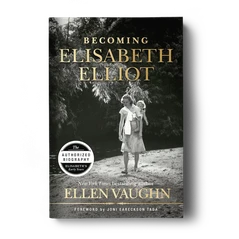
Elisabeth Elliot was one woman who had a heart changed by Jesus . . . and who demonstrated Christlike character in her own life.
Elisabeth and her husband, Jim, were missionaries in Ecuador. They had been married just over three years when Jim and his four partners were speared to death by the unreached tribe they were pursuing with the gospel. Following this devastating loss, Elisabeth and her small daughter Valerie went to the very people who killed Jim to share the gospel. As a result, many came to Christ.
Nancy talked with biographer Ellen Vaughn about Elisabeth’s commitment and compassion. Let’s learn some more about this missionary who followed Ruth’s example.
Ellen Vaughn: So a persistent theme, right in the aftermath of Jim’s death, was that she wanted to go to the Waodani. She wanted to go into the tribe. Perhaps a woman could go where men had not been able to successfully penetrate . . . perhaps a woman and a child, Valerie.
So she prayed a lot. There’s a prayer that was in her journal that I cite in the book, where she said, “God uses the weak things of this world for His purposes. [from 1 Corinthians 1:27] Certainly Val and I qualify!”
Nancy: She didn’t see herself as some great heroic, strong woman.
Ellen: By no means! She did not see herself as Superwoman. She was just a woman in her twenties encountering things she had not expected, but determining in her spirit to stay true to God and to follow Him as best she could.
Nancy: And you can’t romanticize what that looked like, because in following the will of God, there were some really hard things that lay ahead for her.
Ellen: Sure. Day after day after day of pain, for one. We don’t have time to here to go into the whole story. But I tried to do two things in this book: I tried to tell a story that would make people laugh and cry and identify and keep turning pages. That’s what I tried to do as a storyteller.
But also, for me, as I studied Elisabeth’s life, there were takeaways that I could harvest out of her life, that in fact worked in my own life, that enriched my life. I was enriched by knowing this sister’s story.
Nancy: I think one of those takeaways was that she understood that there are certain kinds of questions that’s helpful to ask, and certain kinds of questions that it’s not helpful to ask in the wake of a crisis or a tragedy.
So you talk, for example, about a question that to Elisabeth Elliot was pretty much irrelevant, though it might seem natural to us.
Ellen: That is the question, “Why?” Elisabeth, as far as I can tell by scouring her most private writings, never asked God why He had taken Jim and the other men in the flower of their youth. They could have done great things in the service for Christ and His kingdom, and God chose to take them.
Elisabeth never asked, “Why?” She felt like the question, “Why?” was a waste of time. God is inscrutable. Do we, as creatures, know the ways of the Creator? Can we question God, who dwells in eternity in dimensions that we can’t even know? For Elisabeth Elliot, “Why?” wasn’t on the table!
Nancy: Because He is God, and we are not!
Ellen: Right. And so, if God could be boiled down to, “Well, here’s why God did what He did,” He wouldn’t be God.
Nancy: Or we would be God, if we knew all that God knows.
Ellen: Which is a horrifying thought!
Nancy: Yes, for sure!
Ellen: She was a very practical person, also. She just moved on to the question that she considered the relevant question, which was, “What?” As in, “Lord, what would you have me to do? What is the next thing?”
And what I was impressed with was that immediately in the aftermath of Jim’s terrible death and all of the sorrow, there were many things right in front of her that she needed to do. It was impressive to see in the 1950s that this woman in Ecuador, in a time when women were not necessarily in positions of leadership . . .
She often was behind the scenes working with discipleship of the Quichua believers in the church that Jim had worked to establish, so they could become self-sufficient, so that church—that community of believers—could stand on their own feet. It was a beautiful season. There were many who came to faith in Christ, who were certainly galvanized by the missionaries’ deaths.
But also, the Holy Spirit was at work. Elisabeth saw God moving among the Quichua church that Jim had established. She had many things where she needed to continue the work that Jim had established on a practical level, things that she had no clue about how to do the next thing. Bit by bit, she trusted in God and did the work.
But all the while with her eye toward the future, she prayed, “Lord, if it is Your will, send me to the Waodani.”
Nancy: She wanted that from the get-go.
Ellen: From the beginning. To tell the story now would take too long, but in the book, there were some false starts. It seemed like God was leading her to go to the tribal people, and then setbacks! There was a violent episode that I write about in the book that I had not previously been aware of that would have sent any of the rest of us . . .
Nancy: Packing!
Ellen: Like, “I am out of here! I’m going back to the U.S.!” But she persisted. Then God—against all odds—opened the doors for Elisabeth Elliot and little Valerie and Rachel Saint . . . (Rachel was Nate Saint’s sister. Nate was the pilot who really was the leader of the operation where the men sought to reach out to the Waodani.)
Nate Saint’s sister, Rachel, was a missionary with Wycliffe Bible Translators. She and Elisabeth and Valerie along with Dayuma went and lived among the very tribal people who had slaughtered the missionaries. (Dayuma was of the Waodani people, but had left the Waodani when she was young and now was returning to her people. She was kind of a broker between the two cultures.)
Nancy: Did people try to dissuade Elisabeth from doing this?
Ellen: Her mother-in-law, Jim’s mom, really begged her not to go. Family members wrote her letters: “Don’t do it! At least if you do it, don’t take Valerie!” There was a tremendous amount of pressure—which is quite understandable—that came to Elisabeth, pleading with her not to do it.
Nancy: But she just believed this was what God wanted her to do, and she did it.
Ellen: Correct.
Elisabeth from a past recording: The will of God is not something you add to your life. It is a course that you choose. You either line yourself up with the Son of God and say to the Father, “Thy will be done,” or you capitulate to the principle which governs the rest of the world and you say, “My will be done.”
Ellen: Even though it was counter-cultural . . . Who takes a toddler into a group of indigenous killers (as they were known at the time)? But Elisabeth had a strong sense that God was leading and she “set her face like flint.” She packed up all of her pots and pans and things that she would need to live in the jungle.
They received (this certainly was a sign from God!) an invitation from the Waodani to come. That’s a long story; it’s in the book. She and Rachel and Valerie made their way. I have to tell you in reading the journals of this period of time, it had been a goal for Elisabeth for so long!
Now she’s sitting by the campfire and a man comes. And Valerie, who’s just a little girl, says, “Mommy, is that my daddy?”
Nancy: This is one of the indigenous people.
Ellen: Yes, one of the tribal members. Valerie had heard stories of her strong, young daddy. (She was only ten months old when her dad was killed.) She sees this strong, young man by the firelight: “Is that my daddy?” And Elisabeth said, “The truth is, no, that’s not your daddy. In fact, that man was one of the ones who killed your daddy.”
And so, to be reading these journals and seeing these scenes by the fire, as Elisabeth and Val and Rachel Saint all live with the tribal people who accept them, who hunt for them . . . the Holy Spirit was doing incredible things in this clearing in the Amazon jungle circa 1958!
It was a great reminder to me. All of us sort of have in our heads a paradigm of what is or what could be, and we limit God. And what God put Elisabeth Elliot in, as she was living among The People, was extraordinary! There are enough of the journal excerpts in the book that it makes really surreal reading, almost.
She writes, “Today I met some of the men that killed my husband, and I love them with the love that Jim had for them.” She’s trying desperately to find out what happened, why did the killings take place. There’s that sort of quest for what happened.
And so, her time among the Waodani is also characterized by her desire that they would come to know of Jesus, who was speared for them. I found that, in Elisabeth, there’s none of that sort of Western superiority. She didn’t see herself as civilized, and they were uncivilized. She, in fact, admired the way that they lived. She was not an affectionate person, and yet she overflowed with love for them. It’s extraordinary!
Dannah: To hear more of that conversation about Elisabeth Elliot, visit ReviveOurHearts.com. We’ll put a link in the transcript of today’s program.
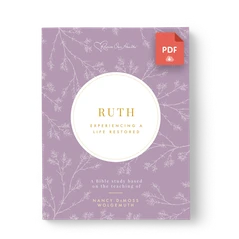
As you continue to grow into a committed and compassionate woman, we’d like to send you our six-week study on the book of Ruth. It’s called Ruth: Experiencing a Life Restored. And it’s a great resource to help you reflect through discussion prompts and Scripture memory. God is a faithful restorer! I hope you’ll see that as you walk through this book. It’s yours for a donation of any amount. Just visit ReviveOurHearts.com to give and request your copy, or you can call us at 1-800-569-5959.
If you were struck by Ruth’s sacrificial heart toward Naomi today and want to grow in your own relationships, we’ve got you covered. Visit ReviveOurHearts.com/relationships to find our best resources on marriage, motherhood, singleness, friendship, and more.
Are you ever tempted to doubt that God is good? Tomorrow, join us again as Nancy talks about fighting off bitterness in the midst of hard circumstances.
This program is a listener-supported production of Revive Our Hearts in Niles, Michigan, calling women to freedom, fullness, and fruitfulness in Christ.
All Scripture is taken from the New International Version.
*Offers available only during the broadcast of the podcast season.