Mentoring Matters
This episode contains portions from the following programs:
"God's Beautiful Design for Women, Day 18"
-----------------------
Dannah Gresh: Have you ever had a heart to mentor other women? I have. I knew I was supposed to—Titus 2 tells us so! But when I really began to pray about it, God completely arrested my heart and took it in a direction I didn’t expect.
I’m Dannah Gresh. Welcome to Revive Our Hearts Weekend where we believe mentoring matters.
Here’s my story:
Twenty-three years ago, I started a ministry for tween girls (ages 8–12) and their moms called True Girl. But, I always felt a bit like a second class contributor in the church. (God forgive me for saying that out loud!) I compared myself to women …
This episode contains portions from the following programs:
"God's Beautiful Design for Women, Day 18"
-----------------------
Dannah Gresh: Have you ever had a heart to mentor other women? I have. I knew I was supposed to—Titus 2 tells us so! But when I really began to pray about it, God completely arrested my heart and took it in a direction I didn’t expect.
I’m Dannah Gresh. Welcome to Revive Our Hearts Weekend where we believe mentoring matters.
Here’s my story:
Twenty-three years ago, I started a ministry for tween girls (ages 8–12) and their moms called True Girl. But, I always felt a bit like a second class contributor in the church. (God forgive me for saying that out loud!) I compared myself to women in leadership who were mentoring actual adults. I would thing, Shouldn’t I eventually graduate to that?
Then, ten years ago my husband Bob and I were invited to attend a series of informal roundtable discussions and strategic prayer sessions.
This by-invitation-only group included leaders from places like my little ministry, AWANA, and the Billy Graham Evangelistic Association. We collectively called ourselves the Tween Gospel Alliance. We were honored to have George Barna in our ranks. The common denominator: each of us were burdened by what we believed would be an increase in the number of young adults who would leave the church in coming years.
Sadly, we were right! There’s been an dramatic increase in church dropouts. In 2011 about 59 percent of young adults would for at least some time depart from the church. In 2021 that was up to 74 percent.1
This should terrify you if you're a mom or grandmother, but I bet it doesn’t surprise you. All of us have a child or know someone whose young adult child is deconstructing.
What’s causing it? Do we blame gender confusion? Or political upheaval? Is it college biology class? TikTok? I think those things play a part, but . . .
After many meetings, members of the Tween Gospel Alliance agreed that the problem was not college or culture. It was the Church failing to strategically plant and nurture deep roots of biblical truth into tweens and teens. This departure, the deconstruction, is a cry. What are they saying? They are saying, "Why didn’t you mentor me!”
This burdened me so deeply!
At one of those meetings for the Tween Gospel Alliance, George Barna turned to all of us and said, “I beg you . . . invest the bulk of your resources—time, money, prayers—into children.”
And I’m begging you. Invest the bulk of your time, money, prayers, and resources into the next generation so that Revive Our Hearts has women to minister to in ten years!
As you obey the Lord in fulfilling Titus 2, don’t forget the little women.
I love mentoring adult women. But the Lord has used that single moment with George Barna; it was a turning point for me. The Holy Spirit changed my passions. Since then, I’ve spent the majority of my time, my ministry funds, and my prayers investing into the next generation, through True Girl.
That’s my unique calling to mentor.
What’s yours?
It will be as different as you and me! But make no mistake, God wants you to mentor.
I think my friend Nancy DeMoss Wolgemuth would agree. In fact, I know she would! She gave a message on Titus 2. She wanted women—young and old—to know one thing: mentoring matters. Let’s listen to part of that message.
Nancy DeMoss Wolgemuth: So we have a lot of women today who are living frivolous, careless lives, spending their time on empty pursuits. Their conversation is foolish and vain. They’re carried away by the values of this world.
For those of us who are older women or are moving into that category, there’s a temptation (I find it in my own life) to look at the younger generation of women and to roll my eyes and sigh and think, The problem with this generation is . . . and then finish the sentence.
“I cannot believe the way women act today. I cannot believe the way these women are . . .” whatever, whatever.
Well according to God’s Word, if you’re having those thoughts, as I confess I sometimes do, we are not to just sit on the sidelines and critique. We have an obligation; we have a responsibility to roll up our sleeves and get involved in the lives of these younger women.
If they are not thinking straight, if they are not living godly lives, if they are not succeeding in their marriage and parenting, we as older women have to ask ourselves, “Have we fulfilled our responsibility to train these younger women to be sober-minded and sensible and self-controlled?”
You see, as older women we’re supposed to be modeling the beauty of an ordered life that’s lived under the control and the Lordship of Jesus Christ. Our lives are supposed to be creating thirst and appetite and hunger in the lives of these younger women.
We’re supposed to be getting up close to them, life-to-life, heartbeat-to-heartbeat, up close and personal, into their lives, into their faces, loving them, training them, urging them, admonishing them and encouraging them, helping them develop a life that is lived under the Lordship of Jesus Christ.
I find that so many younger women today just by virtue of the way they’ve been parented or not parented are clueless when it comes to many practical aspects of marriage and parenting. They have no concept of how to make a marriage work or how to raise kids.
I’m thinking of a friend of mine who had her first child at the age of twenty-seven. She had never held a baby in her life. She needed an older woman to come alongside her and to help her not just in big theological, theoretical ways—those were needed also—but just in practical ways. Here’s what you do as a new mom.
The older women in the church need to get involved in training these new moms, these younger wives, how to live self-controlled, wise lives and what that looks like in every area of life, how to fulfill their duty to God and their husband and their children and others and how to juggle those things.
Can you remember back when you were at this season and it seemed so overwhelming? How many of you would have given a lot just to have some woman come alongside you and put her arm around you and encourage you and help you? Maybe you did have that.
We used to have more mothers and grandmothers who were around and had relationships and lived in the same area so that they could have those kinds of relationships. I know, Vivian, you have that with your mother and your sisters in the area. But a lot of women don’t have that today.
So as the Body of Christ, a community of faith, we need to come around these women and take them by the hand and encourage and instruct and help.
And let me say, by the way, that every woman is an older woman to someone. You may be twenty-three, but you’re an older woman to a sixteen -year-old. So there’s some sense in which all of us should be engaged continually in the spiritual development of younger women.
Who are the younger women around you learning from? They are learning. Who’s training them? Who are their teachers? Is it their peers?
By the way, that is one of the dangers, in my opinion, of churches that become all the same age group of people. A lot of churches are oriented that way. We want to reach this particular segment so we just have people of that age.
That’s not a healthy church. Now it’s great to have peers who love the Lord and are encouraging you in your walk. But younger women need older women.
So who are they learning from? Is it just their peers? Is it Oprah? Is it Dr. Phil? Or is it you? Who is influencing their lives? That means as an older woman you need to have an available and approachable spirit. You need to be the kind of woman that these younger women would feel comfortable approaching, someone they can ask questions of.
But let me say this. If you’re an older woman, don’t wait for the younger women to come to you. Seek them out. Take initiative. Say, “How can I encourage you? How can I pray for you? What’s God doing in your life?” Ask questions; get engaged.
And then a word to the younger women. According to this passage you have a responsibility. And what is it? You’re supposed to be being trained, being trained not just by your peers but by older women.
I was with a group of younger women and had them in my home recently—late teens and early twenties. We were just sharing together and going around the room. They were telling about their spiritual journey. One of these women in her early twenties who has a heart for the Lord, a heart for ministry, said, "This setting has been so good for me. I'm so prone and our generation is so prone to think as younger people that we have all the answers and that we don't need the wisdom and input of older people. But I've realized I do need it. I need to learn. I need to listen. I need to be teachable."
If you are a younger woman, ask yourself, "Do I have a humble spirit? Do I have a teachable spirit?"
And younger women—and by the way I hear this in the churches—“the older women won’t get involved in our lives.”
And I hear the older women say, “The younger women don’t want us involved in their lives.”
So here’s a solution to that. Don’t wait for the other to come to you. You take the initiative. If you’re a younger woman, take the initiative. Find an older woman.
Say, “I’ve been watching your life, and I see your relationship with the Lord. I see that you have a marriage that has held together, and you have children who walk with the Lord. That’s the kind of testimony I want to have someday. Could you encourage me? Could you pray for me? I have some questions.”
Every woman should either be training or being trained or better yet, both.
So how do you get started? Well say, “Yes, Lord.” Just say, whatever season of life you’re in, “Lord, yes. I will do this. I’m committed to being engaged in this training process. I’m available. Use me.”
Dannah: Nancy DeMoss Wolgemuth reminding us just how much mentoring matters in the local church. Today’s program really is all about saying, “Yes, Lord!” both to mentoring and being mentored.
Now, maybe this feels a little intimidating to you. If it does, you’re not alone! A lot of women in the local church worry they aren’t qualified to mentor because, well, they’re not perfect. But Donna Otto wants to help put those fears to rest.
Donna is a mother, grandmother, and a spiritual mother. She’s got lots of experience in training up the next generation to follow Jesus, and she wants you to know that you are qualified to participate in this work. Even your imperfections play an important role. Here’s Donna.
Donna Otto: My definition of this thing called mentoring is giving your life perspective away—giving your life perspective away.
Of course, the passage that draws most of our attention is the Titus passage, and for me that passage was not only the reminder that God had called us to do it, but the reason for it, which is all summed in the last phrase: “That the Word of God will not be dishonored” (3:5).
Nancy: Of course, the passage you’re talking about is where older women are instructed to train younger women:
- how to be a woman of God
- how to be a godly wife
- how to be a godly mother
- how to be a keeper of their home (see Titus 3:3–5)
Donna: What you just did is so seldom done with that passage, but you divided all women into four main walks of life. When we pause long enough to look at womanhood, we say, “We’re always a woman.” My grandmother was eighty-five years old before she stopped taking care of the room she lived in. We all take care of a space where we live until we die, or are unable to. Most of us are wives and most of us are mothers. Now, I’m not talking about the isolated cases. I’m not talking about the population that is single. But they still fall into two main categories of this passage.
Here is Paul telling his young disciple, his young mentee, his young protégé, his young son of the heart, “Now you go back and tell those old women . . .” The context there is that these old women had raised their children, had already recovered the sofa for the last time, had children, and their husbands, and their relationships, and now what were they doing?
They had afternoons free, and what they were doing was going from house to house sipping a little too much wine and becoming malicious gossips. Well, thank you, I can become a malicious gossip without the wine. And Paul says, “You go back—I don’t care if you’re a young man—you go back, and tell the women, ‘This is not what you’re supposed to be doing; this is what you’re supposed to be doing.’”
Nancy: So you asked the Lord, “Whose life do You want me to invest in?”
Donna: Exactly.
But we find a lot of reasons for being busy and not reaching in by the mandate of God to other lives.
The reason why we don’t want to knock on the door of someone’s house is because we’re afraid they’ll think, I’m knocking on the door saying, "Here am I. I have all the answers to your life."
Nancy: And you’re not saying that as a mentor.
Donna: Not at all.
Nancy: And actually you’re saying sometimes, “Learn from my failures. Learn from the things I wish I had done differently.”
Donna: Most often because that’s the authentic life of a godly woman who has not done it right and is not perfect, doesn’t even try to be, just tries to live the standard and ideal that God has set before us in the Word. So that mandate is: Go out there and give your life perspective away to a younger woman.
Nancy: Speak to these younger women about the importance of asking God for a mentor.
Donna: Yes. I think it is clearly God’s desire for us and clearly the tool that God uses in our lives. When you have seen an older woman who has walked ahead of you and has been through what you’ve just experienced—devastation of health, financial reversals, unfaithful husbands, children who are unfaithful to the cause of all you taught them and gave to them. I can go on and on with that list of things that are common to a woman’s heart.
Now when you have an older woman who has walked through those circumstances, been driven by her conviction, has calm in her life because she’s past that, and she looks at you and says, “It will be okay. The words and actions and deeds of God go before you. It will be okay. I made it through. You, too, can make it through. It will be okay. Let me show you how I menu planned. It will be okay.”
I think there is no phase of a woman’s life that she cannot learn from an older woman. Sometimes it is absolutely the minutiae of life that rearranges us.
Nancy: Yes.
Donna: It is that tidbit that says, “Here’s how to put a menu together.”
“Oh. Is that how you get it to the table hot at the same time?”
So an older woman is that woman who comes in and gives her life perspective.
I do think when you’re looking for a mentor, or you’re looking for a daughter of your heart, which is what I call these young women—daughters of my heart—when you’re looking for that, look for someone who is authentic. Look for someone who is willing to tell you, “I blew it. I was so bad at that. My husband has repeatedly asked me to, and I’ve not been able to.”
I think looking for authenticity in a Christian woman’s life is extremely important in engaging in this kind of relationship. Your sister relationship—she needs to be authentic enough to be vulnerable with you and say, “I blew it here.” Looking for an older women, “I blew it then. God taught me.”
I’ve had young women who’ve come into my life who wanted me to mentor them, and they won’t tell me the whole straight story. I can’t have a relationship with someone like that. I won’t steward my time that way. At some point I say, “Ta ta.”
I think the other thing you bring in is not only authenticity, but the fact that you should be looking for a woman who is not desiring to mentor to meet her need.
Nancy: Yes.
Donna: This is very delicate. But if you had a hard relationship with your daughter, sometimes an older woman is looking for a new daughter, or you had a hard relationship with your mother, sometimes she’s looking for a mother. I say that because I experienced that. I’ve experienced that on both sides.
We had a young woman who lived with us for two years. Kim wanted me to be her mama, and it was so hard not to take that role, but I knew that God had taught me that I needed to tutor Kim to give her my life perspective which was, “Honey, you’ve got to find the answers to these questions with your God, and most importantly, you’ve got to get to a place of reconciliation with your mama.
Your mama was not a good mama. That may be true, but you’ve got to find a right relationship with her for yourself. I can’t be your mama. God’s sovereignty does not allow for me to be your mama. I am the older woman in your life. You are a daughter of my heart. You always will be.”
We have to be careful that we’re not exchanging this precious relationship of a daughter of the heart for a need in our own lives.
So I think we have to be really careful about why we’re looking to mentor or be mentored.
Dannah: Donna Otto casting a practical vision for mentoring in the body of Christ. As you think of yourself as an older women, isn't that freeing? You don’t have to have it all figured out! You’ve made some mistakes? That's actually good. Tell the younger women about those. As Donna said, the goal is to give your life perspective away.
As you look at yourself as a younger women, look for authenticity! Find the older woman in your life who’s gonna keep it real. And then be ready to be vulnerable yourself. That’s one thing that makes these spiritual relationships so beautiful.
Now, we couldn’t wrap up today without hearing from one of my favorite spiritual mothers! Susan Hunt. She's been deeply involved in the women’s ministry world for decades, and she’s author of a book titled Spiritual Mothering: The Titus 2 Model for Women Mentoring Women. As she’s served in ministry, she saw just how powerful mentorship can be in the lives of women. Let’s listen.
Susan Hunt: The uniqueness of these relationships is that they’re gospel-inspired and gospel-empowered. They exist in the shadow of the cross and in the power of the resurrection.
When we gaze on the glorious goodness of God in His Word, when we begin to see the redemption story of Jesus in all of Scripture, His Spirit begins to transform us into His likeness. We begin to shine, to radiate the glorious goodness of God. And usually, like Moses, we’re unaware of it because we are increasingly unaware of self.
So not only do we teach women about Him, but because of the mystery of our union with Christ, because He lives in us, our life begins to show the gospel story—not always, and not perfectly—but sometimes, there are goodness sightings in us because the gospel has advanced in our hearts.
Paul captures this idea of teaching and training in 1 Thessalonians 2 when he writes, “But we were gentle among you, like a nursing mother taking care of her own children. So, being affectionately desirous of you, we were ready to share with you not only the gospel but our own selves, because you had become very dear to us” (v. 8).
Teaching and sharing the gospel and our lives with one another. And note how Paul uses mother imagery: He talks about a nursing mother taking care of her own children. This is a nurturing ministry. It is a mothering ministry. Whether or not a woman has ever birthed a child, she can be a life-giving spiritual mother.
This is not just about formal teaching. We’re always teaching—in our relationships, in our conversations. Think about how often as Jesus was out and about among people. He used questions rather than immediately telling them what they should do.
I have five questions that I call my Titus 2 questions that I just have tucked in my mind so that I can use the whether I’m teaching a Bible study or in a conversation.
So let’s pretend for a moment that you have just shared with me a difficult situation or a difficult relationship. I would begin to intersperse these questions into the conversation. Here they are:
- What will it mean for you to bring this relationship or situation under the authority of God’s Word?
- What will it mean for you to glorify God in this relationship or situation?
- Is there any way you’re being a life-taker?
- What will it mean for you to be a life-giver?
- How can I pray for you?
Good questions help us to orient women to God’s Word rather than to her feelings and frustrations. It helps her to think about what is good and true and beautiful.
At a True Woman conference a few years ago, I had done a seminar on Titus 2 discipleship. During the Q and A time, a woman told us that she had approached an older woman in her church and said, “Will you disciple me?” She reported that the older woman eagerly and immediately said, “Yes.”
And then the young woman said, “That was six months ago, and I have heard nothing from her since.”
There was an audible gasp in the room. I looked at her, and I said, “I can only imagine how devastated you are, but may I suggest that that woman is equally devastated because every day she wakes up, and she thinks, I really want to do this, but I do not know what to do. What have I gotten myself into? So she delays another day. And each day she feels more and more guilty.”
So, what can we do?
Many of you are women’s ministry leaders. When the women’s ministry in a local church designs a Titus 2 ministry, trains Titus 2 leaders, and facilitates bringing women together, then we do not have frustrated, disappointed, guilt-ridden women.
Titus 2 Tools are the resources to help you do this. There are ideas for designing various kinds of Titus 2 kinds of ministries and also a section on how to train leaders.
But some of you are thinking, But our church doesn’t have a women’s ministry.
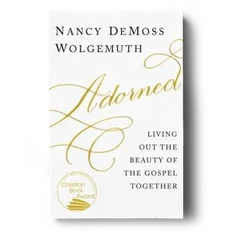
Well, you have women. So invite a younger woman or an older woman or each or several to meet with you maybe once a month and to read through the book Adorned together.
However you do it, when Titus 2 discipleship begins, it is unstoppable. It will not be confined to assigned groups. It becomes a way of life. It changes the culture of a church. It makes church feel more like family.
But some of you are saying, “Well, I’m not an older woman yet.”
Last summer I did a Bible study on biblical womanhood for middle-school girls. At the end of our time together, I asked them to write about a Titus 2 woman in their life. Kate, a twelve-year-old, who is our youngest grandchild, wrote about two twenty-something-year-olds in her church. This is Kate’s story:
Two older girls at my church are making a huge impact in my life as they disciple me. Kristen and Autumn are so faithful and kind to give their time to us younger girls every Sunday to teach us about Jesus. During the week they text me and the other girls in our family group Bible verses and wise advice to help us make good choices as middle-school students.
We also share prayer requests. We have built such close relationships that when girls have gone through tough situations, such as parents getting divorced, family members being diagnosed with cancer, or struggles at school, we can share with the group and know we will be prayed for.
I’m so blessed to have Kristen and Autumn in my life. They are life-givers who teach me more and more about being a life-giver.
So, girls, now it’s your turn. Whatever your age, grow up and step up. Share the gospel and your life with another woman and be a part of extending God’s kingdom. I don’t know what will happen in the life of the other woman, but I do know that the kingdom will advance in your life because Jesus has promised to be with us.
Who, but God, would have thought of such a strategy, using ordinary, weak women to accomplish such an extraordinary mission?
Dannah: What a wonderful challenge from Susan Hunt. “Share the gospel and your life with another woman and be a part of extending God’s kingdom.” I love that. Would you take some time this weekend to ask the Lord, “Who do you want me to share my life with?”
As he reveals his answer to you, I hope you’ll reach out to that woman, maybe by sending a text or finding her at church on Sunday. Whether you’re the younger woman or the older woman, you can take the first step. You can initiate the kind of gospel-centered relationships we’ve talked about today.
Our spiritual mentors become part of our spiritual stories—the stories God is writing for us. Isn't that a sweet thing to think about?
Now, maybe your story is feeling uncertain today. Maybe you’re feeling anxious about the way ahead. If so, we’d love to point you to a book by Nancy DeMoss Wolgemuth and her late husband, Robert. It’s called You Can Trust God to Write Your Story. In this book, you’ll hear Nancy and Robert’s testimony of God’s faithfulness, along with the testimonies of other believers who’ve walked through hardship and found God to be good. This would be a wonderful book to read on your own, or with a spiritual mother or daughter in your life.
We’d love to send this resource to you when you make a donation of any amount to Revive Our Hearts. To do that, visit ReviveOurHearts.com/donate, and be sure to request You Can Trust God to Write Your Story when you do.
Next weekend, we’re celebrating Palm Sunday together, and we’re going to be talking about the humble Savior who came to be close to us. It’s gonna be such a gospel-saturated episode.
Thanks for listening today. I’m Dannah Gresh. We’ll see you next time for Revive Our Hearts Weekend.
This program is a listener-supported production of Revive Our Hearts in Niles, Michigan, calling women to freedom, fullness, and fruitfulness in Christ.
1Barna, 2011, American National Family Life Survey, December 2021.
*Offers available only during the broadcast of the podcast season.