
Steps Toward Healing
Dannah Gresh: If you grew up without the blessing of a father, Blair Linne has some counsel for what to do with your pain.
Blair Linne: Facing the truth about our wounds, I think, is the first step to healing, and it helps us know what's going on in our heart, so that we can actually start this process of of giving those hurts and those pains over to the Lord. So, ask the Holy Spirit to help you to tell the truth.
Dannah: This is the Revive Our Hearts podcast with Nancy DeMoss Wolgemuth, author of Choosing Forgiveness, for August 15, 2025. I’m Dannah Gresh.
Nancy: Blair Linne is talking to us this week about the pain of fatherlessness and how you can get true healing. We’re listening to part two of a message she gave at a workshop at a recent True Woman conference. …
Dannah Gresh: If you grew up without the blessing of a father, Blair Linne has some counsel for what to do with your pain.
Blair Linne: Facing the truth about our wounds, I think, is the first step to healing, and it helps us know what's going on in our heart, so that we can actually start this process of of giving those hurts and those pains over to the Lord. So, ask the Holy Spirit to help you to tell the truth.
Dannah: This is the Revive Our Hearts podcast with Nancy DeMoss Wolgemuth, author of Choosing Forgiveness, for August 15, 2025. I’m Dannah Gresh.
Nancy: Blair Linne is talking to us this week about the pain of fatherlessness and how you can get true healing. We’re listening to part two of a message she gave at a workshop at a recent True Woman conference. She’s helping us understand what it means that we’re adopted into God’s family. She’s also stressing the importance of forgiveness, and providing an action plan for women with absent fathers to find healing. It’s a powerful message that speaks to the hurt so many women have experienced. Let’s listen:
Blair: We have a testimony in the Word of who our God is. Recently, I’ve been studying through Ephesians, and it’s been so beautiful. Every book I study, I’m, like, “Man, this is the best book ever! Why didn’t I study it sooner?” Two of the themes in Ephesians is the fact that God reconciles us to Himself through Christ, and then He reconciles us to one another.
In the context of this book, Ephesians, you have Paul writing to these Gentile believers. There’s not one particular issue. However, we do see that there is some ethnic hostility. We see that in the mix: there are Jews, and there are Gentiles. There is division over how they should be taught.
Paul says, “You’re saved by grace through faith.” But there were certain Jews who said, “Well, you need to follow these traditions and these laws.”
Paul’s, like, “No.”
Paul receives hostility because of that, and these believers receive hostility because he’s standing on the gospel. That, “No. It’s not about tradition. It’s not about these laws. It’s about the fact that we’re saved by grace through faith.”
The reason I tell this is because the first chapter of Ephesians, Paul goes into this beautiful breakdown of all of this theology. (When you get a moment, I want you to go back and reread it.) In there he talks about what I see as this fatherly blessing that we have as believers, and we have it in Christ.
He says, “Every spiritual blessing is in Christ.” I just see it like what a father should be as a father ministers to his children. Paul says, “You have the blessing of election, and you have the blessing of adoption, the blessing of redemption, and the blessing of the Holy Spirit, and the blessing of an inheritance.” Paul fleshes that out for the believers.
Now, I want to spend a little bit of time talking about the blessing of adoption which is at the end of verses 4 and 5. He says, “In love he, (speaking of God the Father) predestined us for adoption to himself as sons.”
This blessing of adoption is accessed through Jesus, the Son of God. As we have believed in Jesus, we now have become sons. I actually like the term sons. I know it’s a masculine term, but I think it just points to the fact that we’re united to Jesus. So all that Jesus has received and has because God is His Father, we have received, and we have now because God is our Father.
So, God the Father is the original father. Right? He is the Father of Christ. And our Brother Jesus became our substitute. Our sins were imputed on Him. His righteousness was imputed to us. That great exchange happened.
There’s a quote by Martin Luther on this that I love. He says:
Lord Jesus, You are My righteousness, and I am Your sin. You took on You what was mine. Yet set on me what was Yours. You became what You were not that I might become what I was not.
We now have everything that belongs to Jesus. So we’re no longer a slave. God the Father is not merely tolerating us. He didn’t grumble when we came to faith. We are actually heirs with Christ. We are children of God.
Romans 8:17 says:
And if children, then heirs—heirs of God and fellow heirs with Christ, provided we suffer with him in order that we may also be glorified with him.
And I don’t want you to miss that motivator where he begins there in that sentence in Ephesians. He said this adoption, the cause of it, the reason we have it, it was done in love—in love. That’s what allows us to have this permanent, predetermined place in God’s family. Scripture says, “In love he predestined us for adoption.”
And that truth, that reality, that God did this intentionally in love, it really shattered any idea that I had of God as merely tolerating me. He’s not merely tolerating us. He loves us. He chose to love us and chooses to love us. He is love.
And when the Bible speaks of love for the believer, it’s always connected to the gospel. It’s always connected, often, to Jesus’ sacrifice. His love, Jesus’ love, is what brings us into the family of God.
It’s all according to the purpose of God’s will. The Scripture says, “Even before the foundation of the world,” this was something that God worked out before we were born. He said, “I’m going to choose to love you, and I’m going to send My Son in order to accomplish this.”
So when you came to Christ, you were not twisting God’s arm. It was the Father’s will to bless you with Himself. Adopted children have their position by grace, not birthright.
J.I. Packer in Knowing God says:
Justification is the primary blessing because it meets our primary spiritual need. But this is not to say that justification is the highest blessing of the gospel. Adoption is higher because of the richer relationship with God that it involves.
I like to think of it, like, if justification takes you into the courtroom, adoption takes you into the family room. We have a family.
Jesus says, “In My house are many rooms. If it were not so, I would have told you. I am going to prepare a place for you”—for you (John 14:2). Tuck that away—for you. You. And you. And you. And you. And you. And you. And you. He’s gone to prepare a place for you. You have a place in the family of God.
And the more we gaze upon our heavenly Father, and we allow Him to define who He is, we become a restored daughter. I think we begin to heal. There’s that vertical healing that has to take place between us and God often. And digging in the Scripture, I think, is where that takes place. It’s not going to happen as we view God through the lens of our pain. We have to open up the Scripture and just say, “Okay, well, who are You? Allow the Scriptures to define who You are.”
As we do that and that vertical healing happens, then there’s a horizontal healing that needs to take place. I want to talk about that, that horizontal healing between us and our parents.
Often, those things can be happening simultaneously because this is a sanctification process. It’s not like, “Okay, have everything figured out with God, and so now I can begin the journey.” We’re never going to have it all figured out. God is working in our life vertically. He’s ministering to us, encouraging us, strengthening us, maturing us.
As a result, it’s blessing our relationships. That’s what Scripture says, “If you say you love God, who you’ve not seen, you can’t hate your brother who you do see.” So there’s a connection between us loving God and us loving those people He’s placed—sovereignly placed—in our life. Like, He’s sovereignly chosen our families, as hard as our circumstances may be.
And Ephesians . . . I want to jump back there real quick because I mentioned this ethnic hostility. Paul says that there’s a wall of hostility. So there were Jews and Gentiles, and, literally, a wall of hostility. Why do I say “literally a wall of hostility”?
In Jerusalem, in the temple, Herod’s temple, there were four separate courts. So there was the outermost courtyard area, farthest from the Most Holy Place. And that was called the Court of the Gentiles. This was the only place the Gentiles or foreigners or those who were viewed as impure could gather. They could go no further in the temple area because there was this literal wall. If they crossed that, they actually could die, so this wall kept them out.
But Paul tells them, “This wall has been torn down.” I want you to keep in mind when this letter was written. I find it interesting. This letter was written in 61 A.D. So, was there a physical temple still there? Yes. The temple was destroyed in 70 A.D. These Gentile believers, which most of us are Gentile believers, they could not enter the inner courts of the physical temple because they were viewed as unclean. They were defiled because of their natural heritage.
So what did God do? God broke past their natural heritage. They could not approach the God of this temple, the holy of Holies. So God did the unthinkable. God went to them—Immanuel, God with us. And what He did, He filled them with Himself. The Scripture says, “He filled them with all the fullness of God.” It says in Ephesians. They could not enter the physical temple, so He made them a spiritual temple where He dwells in them.
The reason I bring this text up is because it’s been extremely encouraging for me, and not that this topic has to do with ethnic hostility. I do think that there can be hostility between us and God. There can be things keeping us away from God. Sometimes it has to do with our natural heritage. But God says, “I’m going to draw close to those whether unclean, whether the orphan, the wayward, those who are viewed as the outcast. I’m going to come to you so now you can walk in your newfound identity because now you are the temple of God. You are now filled with the Holy Spirit. You are now the family of God. You’re the Body of Christ. I’m coming to you.”
He does a work in us. God draws near to them because He’s their Father and they are His children, and He loves them. He loves the people spoken of in Ephesians. But also, God draws near to us because He’s our Father and we are His children, and He loves us.
God desires to fill us with all the fullness of Himself, and that means we need to know who the Father is through the Son and be indwelt by the Spirit. When we’re indwelt by His Spirit, then and only then can we walk in the Spirit, which is also spoken of in Ephesians. And that horizontal, victorious living comes only through the Spirit.
I just want to be clear and frank with you. The life that the Lord is calling you to walk out as it relates to your earthly parents, you’re going to need the Holy Spirit in order to do it because when your biological father is spiritually or emotionally or physically absent, and you’re the believer, you’re going to have to be the mature one. You’re going to have to be the bigger person. You’re going to need to do it in the Spirit.
In the book, I walk through some practical things that I’ve done, and am still doing, in order to be victorious over fatherlessness. I just want to walk through four practical things that you can do to live victoriously as you walk in the Spirit.
First, I want to encourage you to write your story down. Write your story down.
Be willing to do the hard work of unearthing your story that’s hibernating in your heart. As I’ve said before, try to do it without judging yourself. Just get a journal, and just find a place to write. It may be helpful to write your father a letter, even if you don’t send it. What is it that you would like to share with your father? How has his absence affected you?
I want you to say everything that you’ve always wanted to say, even if you’ll never send it. Your father could have already passed away. He may never receive the letter. But I want you to get down your thoughts and tell your story and how you feel about your father’s absence.
Another thing you could do is write God a letter. Tell God how difficult it’s been.
It’s why I asked the first question about what’s your word or words because I think it’s a good starting point. Facing the truth about our wounds, I think, is the first step to healing. It helps us know what’s going on in our hearts so that we can actually start this process of giving those hurts and those pains over to the Lord.
So ask the Holy Spirit to help you to tell the truth. As you write your story down, I want you to, number two, I want you to pray for your parents. If your parents are living, pray for them as often as they come to mind. You may not even know where your father is. You don’t know if he’s alive or not. You can still pray for him because he might be alive.
As I mentioned, so many of our parents are spiritually lost and emotionally broken. Pray that they would know and model their Father in heaven, the True Father. Pray that they would come to know God as Father.
And number three, ask God to help you to forgive.
Now, if you’re struggling with unforgiveness . . . I have been there. I know it’s not easy. It’s something I have learned in the process. Some of you talk about forgiveness like it’s just one and done. Like, you just forgive, and then you move on. But sometimes, especially if the person is still in your life, or you could be reflecting upon those hurts, it’s like those wounds are just open again and again and again.
And something I’ve realized is that forgiveness is a continual process. It’s like waking up every day and choosing, “I’m going to forgive that person. I’m going to forgive my parents.”
Maybe they do something else to hurt . . . “I’m going to forgive them again.” Making that choice consistently.
I do want to give a caveat, though: forgiveness does not mean putting yourself in danger. I just want to be clear about that. If you’ve experienced abuse, that does not mean you have to just pretend as though there’s no abuse and you walk into a hostile, dangerous situation. That’s not what I’m saying.
I think oftentimes, forgiveness can require boundaries. I think there can be healthy boundaries that are established when you forgive someone who still has the power to harm.
But a helpful place to begin, if you’re struggling with unforgiveness, is Matthew 18. The parable of the unmerciful servant has been tremendously helpful in my life. It helps us to reflect on how much we have been forgiven.
When we see ourself in light of God . . . We often see ourself and comparing ourself to others. It’s like, “Well, okay, I may be doing it better than you. I didn’t do that bad.”
But when God is the standard—His standard of perfection—we realize, “God, You’re holy. You’re without blemish. I have sinned against You, and You have forgiven me? How can I, a sinner, say I’m not willing to forgive another sinner when a holy God has forgiven me?”
But I understand it takes time. I understand, as I said, it is a continual process of forgiveness. So ask God to help you to forgive.
I think it can be helpful to get accountability with that as well. Even if you’re unsure, “Should I walk into this situation?” If there are godly people around you who can give you counsel, give you wisdom on the situation on whether it’s healthy to walk in there, I think it would be wise to seek out godly counsel.
And then number four that goes with that, is prioritize your redeemed family.
One of the things that Scripture does is it prioritizes the church family. Jesus says, “Who is My mother? Who is My sister or brother?” Notice, He didn’t say, “Who is My Father?” He knew who His Father was. But He says, “Whoever does the will of My Father in heaven is my brother and sister and mother.”
Something that I think is often missed when it comes to spiritual adoption is we talk about the fact that we have a Father in God, but we miss the fact that we have a family in the Church. We have a whole new family. As a spiritual family, we actually should be welcomed as family. I know, unfortunately, not everyone has even had that experience.
I talk about in the book of having dealt with spiritual abuse in the context of my local church years ago. It’s hard when you’ve suffered under your biological family in ways, and then you’ve suffered under your church family in other ways.
But I do want to encourage you not to give up on the people of God, because we’re all sinful. We know there’s no perfect church. And my prayer is just, in my situation it was a wolf who was leading that flock. My prayer is that the Lord will guard you from those who are seeking to destroy the sheep, and that you would find yourself planted, rooted in a healthy, local church where there are people there you can trust, godly people who are striving for the same goal.
I wonder if you have an older, godly person in your life or in your church that maybe you could follow as they follow Christ, someone that you can confide in, to say, “You know, I need some help. I need somebody to walk with me through this. My dad never walked through with me . . . walk with me through finances (for example).”
Are there any godly people in your church context who could bring on what I call holistic discipleship?
Sometimes when we think of discipleship, we only think about opening up the Bible, which is really important that we open up the Bible, but it doesn’t stop there. I think we can talk about finances and life decisions and understanding how to be a wife and mother, because I never saw it modeled.
It was the church that the Lord really used in my life to teach me those things and help encourage me and walk me through: what does it look like? What does it look like to have family worship? What does it look like to sit down at the table and have dinner? We didn’t do that growing up, not consistently. My sister and I would sit at the table, but my mom was a working mom and busy.
What does it look like to sing together and pray together and fellowship with one another?
I think there can be times where, at least there were times in my life, where I needed to break free from my natural response to flee when things got really hard. I was never used to being consistent with a thing, because when I didn’t like it, I just fled. We moved twenty-five times throughout my childhood. So I was used to if you don’t like something, just move on. There was no stability.
What does it look like to be married? I’ve been married for twelve years. To be married and content and to mother and do the day to day and not try to lead my husband because my mom was the one who was leading our family. I came from a very strong woman. She did everything. She was the one who was there to absorb all of the . . . When the bills came in and we couldn’t pay and we needed to get evicted again, she absorbed those things. She had to figure it out.
So, what does it look like to let my husband lead? We need help. I think the Church is our mother and our sister and our brother, not our capital F Father, but there can be godly men that can be a good model, a healthy, pure model of what it looks like to lead the family.
So think about: who is in your community, who is in your local church that you might be able to model and say, “I’m going to just invite myself over to your house. I’m coming over for dinner. Just set another place for me”?
Ask God to help point you towards someone who would care well for you. And I do want to say, not misuse your vulnerability because they fear God and they know that you are family.
Now, I do want to give a word of application for those here. You may have had a wonderful father, and you want to care for the fatherless. Just to kind of summarize, I just want to let you know there are so many Scriptures throughout the Bible where God speaks about the fatherless. There’s so many texts in the Old and New Testament where He says, “I want the Church specifically to care for the fatherless.” And we are, as I said, a family. We’re members of the household of God. We are one.
And just to name a few:
Deuteronomy 10:18: “He executes justice for the fatherless.”
Psalm 68:5: “Father of the fatherless and protector of widows is God in his holy habitation.”
Psalm 82:3: “Give justice to the weak and the fatherless.”
Isaiah 1:23: “They do not bring justice to the fatherless and the widow’s cause does not come to them.”
And a passage that we’re familiar with in James, the brother of Jesus, he says, “Religion that is pure and undefiled before God the Father is this: to visit orphans [I think we often think of those who are adopted or fostered, but the fatherless fit into that category.] and widows in their affliction, and to keep oneself unstained from the world” (James 1:27).
So, it’s the Church’s responsibility. This is the true religion that we’re called to as believers. And the Scripture says, “As we have opportunity, let us do good to all, especially those who belong to the family of believers” (Gal. 6:10).
So, it is important for us to come alongside one another and care for one another.
Your father may not have been what you wanted him to be in your life. If you were fatherless, I just want to say, “But God . . .” Those cycles of sin, they can stop with you because of the gospel. And God doesn’t leave you alone. He’s given you Himself, and He’s given you a family. And because of Him, by God’s grace, we can get through this together.
Nancy: Amen. That’s Blair Linne offering unshakeable gospel hope. Now, I want to review that four-step plan Blair gave us, because I think it’s such a helpful, biblical framework. If you’ve experienced the pain of fatherlessness, I hope these action steps will help you move towards healing.
- First, write your story down. Blair suggested you could write your father a letter and tell him how his absence has affected you. She also encouraged you to write God a letter, to tell him how difficult it’s been.
- Second, pray for your parents as often as they come to mind. If they’re spiritually lost, pray that they would come to know God as Father.
- Third, ask God to help you to forgive. This is hard, but it’s not impossible. Remember it’s a continual process, a daily choice.
- And fourth, prioritize your redeemed family. All those who are in Christ have a Father in God and a family in the church.
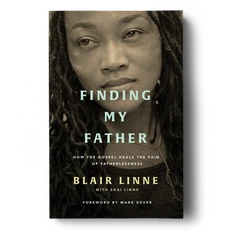
I just love that. I’m so grateful Blair was willing to share her story and her wisdom with us. Her book is titled Finding My Father, and there’s information about how you can get a copy at a link in the transcript of this program, at ReviveOurHearts.com.
And I’m also grateful that, because listeners give generously to support Revive Our Hearts, programs like today’s episode can be translated into many different languages. The pain of fatherlessness isn’t isolated to our part of the world. It’s an effect of sin that is widespread, and it brings me so much joy to know that women all over the world will get to hear this message of hope and healing.
If you’re curious about which languages Revive Our Hearts is currently being translated into, you can visit ReviveOurHearts.com/languages to get more information. And if you’re excited about the kingdom work Revive Our Hearts has the privilege of participating in, I want to invite you to partner with us. You can do that by making a financial donation today.
This month, when you give a gift of any size, we’d love to send you a copy of Pastor Paul Tautges’ A Small Book for the Hurting Heart. To give, visit ReviveOurHearts.com, or call us at 1-800-569-5959. Be sure to ask for Pastor Paul’s book when you do.
On Monday, we’re diving into a nine-day series called “Walking through Life’s Deserts.” If you’ve been feeling like a worn-out wilderness wanderer, then these next two weeks are for you!
Have a wonderful weekend. I hope you’re able to gather with God’s people in your local church, and then join us again next week for Revive Our Hearts.
This program is a listener-supported production of Revive Our Hearts in Niles, Michigan, calling women to freedom, fullness, and fruitfulness in Christ.
All Scripture is taken from the ESV.
*Offers available only during the broadcast of the podcast season.