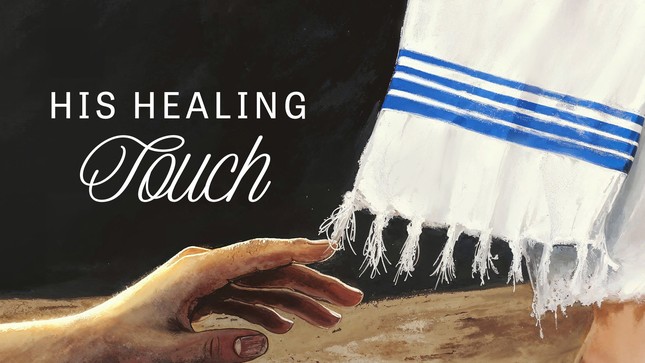

She Was Living Dead
Dannah Gresh: Do you feel like you’ve run out of options? Nancy DeMoss Wolgemuth says that could be a good thing.
Nancy DeMoss Wolgemuth: Because when you and I exhaust all hope, all human hope; when every human thing we would look to to try and help us with our need has failed, that may be when we finally get to Jesus.
Dannah: This is the Revive Our Hearts podcast with Nancy DeMoss Wolgemuth, author of Brokenness: The Heart God Revives, for August 4, 2025. I’m Dannah Gresh.
Do you ever look at some need in your life and wonder, How long will I have to put up with this? You are not alone. The gospel writer Mark told the story of a woman like that. Nancy will help us get to know her over the next few days.
But to get us started, Nancy …
Dannah Gresh: Do you feel like you’ve run out of options? Nancy DeMoss Wolgemuth says that could be a good thing.
Nancy DeMoss Wolgemuth: Because when you and I exhaust all hope, all human hope; when every human thing we would look to to try and help us with our need has failed, that may be when we finally get to Jesus.
Dannah: This is the Revive Our Hearts podcast with Nancy DeMoss Wolgemuth, author of Brokenness: The Heart God Revives, for August 4, 2025. I’m Dannah Gresh.
Do you ever look at some need in your life and wonder, How long will I have to put up with this? You are not alone. The gospel writer Mark told the story of a woman like that. Nancy will help us get to know her over the next few days.
But to get us started, Nancy tells us about some other women who contact her and tell her about the problems that just seem insurmountable.
Nancy: One of the things I find particularly sad is when women talk about an issue that they've been wrestling with for years and years without seeming to get any help or any relief.
These are some of the kinds of things that women have said to me along this line. One woman wrote and said, "I am depressed and suicidal and pray constantly for relief. I believe in God and that He answers prayers, but I've been waiting for years."
Another lady said, "My marriage is breaking up. It's been an unloving, unnurturing marriage for over twelve years. My heart is broken and I'm spent."
In a different life circumstance, this woman said, "My heart died four years ago when I buried my daughter. Pray that God will heal me so that I can open up my heart to my husband and my three other daughters."
Another lady said, "I've been in a spiritual desert for about fifteen years." I don't know what the details were of that spiritual desert, but that's a long time to go without any sense of refreshing or your needs being met during that period of time.
Another lady said, "My heart remains bloodied and bruised for five years since my fiancé was unfaithful just weeks before our wedding."
Another woman wrote and told me about an eating disorder she had struggled to overcome for fourteen years. She said, "I have constant lies from Satan attacking me." Fourteen years . . . wrestling with the issue of control, of bondage.
As I read those statements, does something come to your mind? Something you've wrestled with, struggled with—and not just for a week or two, not just a month or two, but for years? Some internal issue? Some sin issue? Some area of conflict or bondage or a relationship that's been a troubled one? It's been years and years that you've been dealing with this issue.
I want us to look over the next several days at a woman in the Scripture who understood what it was like to have to struggle with a difficult issue for many years. If you have your Bible, we're in Mark 5. I'm going to begin reading in verse 21 to give us a little bit of a context for this woman's situation.
Mark 5:21: "Now when Jesus had crossed over again by boat to the other side, a great multitude gathered to Him; and He was by the sea." So we see here there is a great multitude of people pressing in on Jesus. Not only is there a big crowd, a great multitude, but there is a great man in that crowd. There is the V.I.P.
Verse 22 tells us, "Behold, one of the rulers of the synagogue came, Jairus by name." Jairus was an important man. He was perhaps a man of wealth. He had a position. He was respected. I can just imagine perhaps that when he walked into that crowd that the crowd kind of parted to make room for Jairus. Maybe he had his entourage of people who were his assistants. He was looked up to and respected. He was in the crowd this day. So we have a great multitude and a great person who is in that great multitude.
Verse 22 tells us that "when [Jairus] saw Jesus, he fell at His feet." We have a great emergency. Verse 23 tells us that:
[Jairus] begged Jesus earnestly, saying, "My little daughter lies at the point of death."
This great man, all this position that he had, at that moment was not very helpful to him because he had a great need. And that great need in his life became a situation that he brought to Jesus, and he said, "Lord, come!"
We can just image as we read the text . . . The problem when we are familiar with the passage is that we just read the words. Put yourself in this situation. He's this man. He doesn't care who all is there or what else needs to be done or what else is on Jesus' agenda, "Jesus! Help me!"
There's this sense of desperation and urgency. I think we can assume that he may not have been too excited about the interruption, that this woman was about to bring into this situation.
So this man says,
"My little daughter lies at the point of death. Come and lay Your hands on her, that she may be healed, and she will live." So Jesus went with him, and a great multitude followed him and thronged him. (vv. 23–24)
That word "thronged" gives the sense of pressing in on Jesus. It's as if He hardly has room to breathe. You just see this great crowd. They pressed in on Him.
In the midst of this great crowd with this great personality of Jairus, who has a great need and a great emergency, verse 25 tells us, "Now there was a certain woman." A certain woman. We're not told her name. We just know that she was a woman who had a need that was very personal to her. It was great to her, but a need that she could probably not expect anyone else to care about. A certain woman.
She is in contrast to Jairus. He is a big man, the big name with the big position. And it's understandable that Jesus would care about helping out Jairus. But here is a woman. Now today that wouldn't be such an insult, but in those days to be a woman was to be a second-class citizen or to be considered as a second-class citizen by other people. Here is a great man and here is just a woman. But she's a certain woman.
The fact is that God knows that woman's name, even though we don't. God cares about this woman, even though others may have been ignoring her, insensitive to her needs, not caring about what happened to her. She considered herself insignificant, as we'll see in the passage. She's just one woman. And not only is she just a woman, but she is a social reject. She's the kind of person that crowds don't open up for. She's the kind of woman who's not very attractive, who has nothing to offer, just the reject, the person others may have no interest in helping. She has been rejected and cut off from her society because of a physical ailment.
The passage goes on to tell us that this woman had a flow of blood for twelve years. For twelve long years, she has had an issue that has been a major issue in her life. It's a physical problem, but it has created many other problems for her. It's interesting that she had been dying for twelve years, which was exactly the same length of time that Jairus' daughter had been living. I think that this whole interruption here, which Jairus could have seen as a major distraction, really is going to be a challenge to Jairus' faith—to see that if Jesus can help this woman who has had this major issue for twelve years, then Jesus can also help his daughter who, at twelve years of age, is dying at home.
This woman, the Scripture says, "had a flow of blood." We don't know exactly what that means. It may have been an internal hemorrhage that had been going on in her body for all these years. It may have been a chronic issue related to her monthly cycle. We don't knowproblem was, but we know that it was an internal problem. It was something that would probably not have been immediately apparent to people who didn't know her. However, this internal problem had huge ramifications in this woman's life. In the Old Testament, a blood disease or a blood disorder is a picture of sin—an internal issue that creates huge problems and has massive ramifications for every area of life.
We know from the Scripture that sin contaminates. It defiles us. It separates us from God and even breaks our fellowship with others. In the Old Testament, to give a picture of the contaminating, defiling, separating nature of sin, God established some laws for the Jews to help them have a picture of what sin does.
In Leviticus 15, we're given some regulations that the Jews had to abide by. They were told that if a woman had a blood disorder, if she had a blood disease of the nature of what this woman had, that she was ceremonially unclean. That meant that for the duration of her disorder that she was to be separated from her family. She would be shunned even by those who knew and loved her. She would be excluded from the synagogue or the temple. She couldn't worship in the public place. She'd be cut off from normal, social relationships. This was a social and religious isolation.
I think God wanted us to see by this Old Testament picture and regulation that sin cuts us off. It breaks fellowship with God. It puts up barriers even in our relationships with other people. Anything that this woman touched would also become ceremonially unclean. Anything that touched her or that touched someone that she touched or something that she touched would be ceremonially unclean. So you see, this is a picture of how sin defiles—how it contaminates. This woman was a living dead person. She had an incurable illness, and her life is a picture of the consequences of sin.
I think probably this woman was embarrassed by her problem. My suspicion is that she didn't want others to know. There were some who had to know. But she wanted to hide herself and to go around and not let other people really see inside of her. Twelve years is a long time to live cut off from relationships and fellowship and love and physical contact. Anybody who touched her would be defiled, contaminated. So here is a woman who has lived without touch, without love, without communication, without relationship, without fellowship.
As I look at this woman, I see such a picture of many women that I know, women that you know, some women in this room. They are carrying internal baggage; they have been maybe for years. I can't tell by looking at you what it is that is going on inside of you. I'm amazed at how many people . . . I heard a woman give a testimony recently in my church who I think of as the most joyful, happily married woman. She stood up and gave a testimony with her husband. God had been dealing in both of their lives. She told how for years she had felt that her husband did not love her. She had been bitter and resentful and angry. We were shocked. I mean, this is a couple we know and love. No one knows, except God, what is going on inside your heart, inside mine, that may be of this nature.
For some of us, it may be wounds that have resulted in bitterness, anger, hatred, depression, shame, guilt. Some of us are living defeated lives, anxiety, chronic worry, substance addictions, sexual addictions, fear. For some of us, we've just closed our hearts, because they've become bloodies and bruised by the circumstances of life.
I daresay there are probably one or more in this room—it's not any great big gaping wound, but it's just because of hurt—you've shut yourself off from God and others. And (you) are going through the motions of living this robot Christian life, doing the right things, saying the right things, going the right places, just going through the motions—no real life. You're a living dead person.
It's easy to feel, after all these years, that this disease is incurable. In fact, it may be. We're going to see that when this woman gets to Jesus that she experiences a miracle.
Dannah: Nancy DeMoss Wolgemuth isn’t done. She’ll be right back to tell us about the moment when this woman encounters Jesus.
But before she does, I want to tell you about a devotional Pastor Paul Tautges wrote. It’s called A Little Book for the Hurting Heart, and it’s a wonderful complement to our current series. Nancy endorsed it, and she said, “How often I have wished for this kind of resource to share with a friend in the throes of grief. A wise, seasoned pastor and counselor, Paul Tautges comes alongside the person in pain with short, encouraging, grace-filled reflections from God’s Word.”
What a testimonial! This resource is yours when you make a donation of any amount to support Revive Our Hearts. To give, visit ReviveOurHearts.com, or call us at 1-800-569-5959. Be sure to ask for A Small Book for the Hurting Heart when you do.
Okay, back to the woman who encountered Jesus in Mark chapter 5.
Nancy: It's interesting in Mark's gospel that this many details would be given because Mark tends to be short on details. He tends to use words like "immediately" and "straightway" and skips some of the details. He gets to the bottom line faster. But in this case, he tells us some details about this woman's past. I think it will encourage those of us who perhaps have walked through some similar things in our experience.
Verse 25 tells us that she had this flow of blood for twelve years. This is a long time to have endured this incurable illness. Then verse 26 tells us that it's not that she hadn't tried to get help. It says that she had suffered many things from many physicians. She had gone to doctor after doctor after doctor. In twelve years, you can go to a lot of doctors. She was trying to get help for this ailment.
I can just imagine from word of mouth and from maybe some advertisements that she had read that she heard, "This doctor specializes in blood disorders," or "This doctor specializes in incurable illnesses." Hope would be ignited. She would go to the doctor. He would run all the tests, put her through all the agony and the indignity of getting her situation tested and then come back and say, "I'm sorry I can't help you."
I was reading something that Charles Spurgeon, the great preacher of the nineteenth century, that he wrote about this woman. He talks about what it was like to go to doctors in those days. Let me quote from his chapter on this woman.
The physicians of those days were a great deal more to be dreaded than the worst diseases. What with cupping, leeching and cutting, cauterizing, blistering and incision, strapping and puncturing, patients were made to undergo all manner of unimaginable tortures.
The physicians of her day had reached perfection in the arts of torment. I know not how many operations she had endured, nor how many gallons of nauseous drugs she had swallowed, but they had certainly caused her a vast amount of suffering and worse yet, perhaps, bitter disappointment.
Each time the hope was ignited in her heart, she'd go and then have the hope dashed. "Maybe this person will help me. Maybe this treatment will help me. Maybe this therapy will help me." Yet, none of it had been successful.
Mark 5:26 tells us, "She had suffered many things from many physicians. She had spent all that she had." These doctors were only too happy to take her money, even though they had nothing to offer her that was helpful. Now she comes to the place where there are apparently no more doctors to see. If there were more doctors to see, why would she go through the excruciating pain of suffering one more examination by one more doctor who didn't know what he was doing? Even if she could have borne all that, the fact was that she had no money left. She had spent all she had. There was no where else to turn.
She's now destined and resigned to live with this incurable illness, thinking that there is no hope, no help. She has exhausted all of her options.
Let me say that that's not actually a bad place to be in when it comes to matters of the heart. When you and I exhaust all hope—all human hope—when every human thing we've looked to to try and help us with our need has failed, that may be when we finally get through the crowd and get to Jesus, when we go to the One who really is our only hope.
Now she is not there yet. Mark gives us a few more details. It says she had spent all that she had. And "she was no better but rather grew worse" (v. 26). It's one think to have this problem for twelve years. It's another thing to go to all these doctors and all this suffering and spend all her money just to find out that not only is she no better but she is worse than when she went through all those routines. I wonder if this woman just thought, she must have thought, "I'm just going to have to live this way forever. It will never be any different. I will never be any better."
In fact, it occurred to me as I was meditating on this passage this week that really the only thing this woman had to look forward to was dying. You wonder if she didn't perhaps have some moments of contemplating even taking her own life. I know women who have contemplated taking their own lives because life just seems too hard. The burdens seem so great. The pain seems so unbearable. They're not better. They're only worse. They may as well just get it over with and die. We don't know if she had come to that point, but it seems that there was nothing that she could look forward to. Her situation was truly desperate.
As I have pondered this woman and her situation, my mind goes to other women that I know. Women who have had twelve months or twelve years or decades of suffering, pain, emotional abuse, and baggage that they've carried with them, issues that they've not been able to deal with in their past. Women who are living with defeat in major sin areas of their lives.
I think of some of these women who have looked to a lot of different places to get some help. Women who have been to counselors. They've been to therapists. They've been to doctors. They've tried every conceivable therapy and drug. Some of them are even trying a lot of different religions. They are trying to escape, trying to get help, trying to have some hope. But in many cases, these women are not only not better, and they're not getting help, but in some cases, they're actually worse off. They've lost hope. They've concluded that is always going to be this way. There is no hope left.
I wonder if there are some listening today, even in this room, that are feeling this way. "I've made all the effort. I've done everything there is to do. I've tried everything. I don't have any money left. There is no hope." Maybe you're feeling that way today. Maybe you have felt it at some point in your past. Let me say again that there is only one source of true hope; and this woman is about to find not it, but Him. That hope is a person. He is a man. He has a name. His name is Jesus. The hope that this woman found in Jesus is where you will find ultimate hope and help.
When you really want to get help, you need to get to the Wonderful Counselor. His name is Jesus. Verse 27 tells us that this woman heard about Jesus. "When she heard about Jesus, she came up behind Him in the crowd and touched His garment." What had this woman heard about Jesus? What made her risk the rejection? The press of the crowd and perhaps fight her way? I don't think it was easy for her to get to Jesus. She had to make an effort. What made this woman who had tried everything—everything had failed, nothing had worked, she had no money to offer—what made her willing to press through that crowd to get to Jesus? What had she heard?
Maybe she had heard what we read about in Luke 6, which says, "The whole multitude sought to touch him, for power went out from him and healed them all." Maybe she had heard a report from someone who had been in one of those crowds, someone who had been perhaps just where she was, someone that she had shared her misery with over all these years. We don't know. We just know she heard about Jesus.
Apparently, what she heard is that this man has power. "This man is not like another doctor that you've been to. He's not just another professional taking your money and not solving problems. This is a man who has power." Maybe she'd heard from one of those who believed in Jesus. "This man is God come to visit us on earth." Maybe she heard about the lepers. They were also social outcasts, but Jesus had touched lepers and when He did, they were healed. Maybe she'd heard about Him putting His hands on the eyes of the blind man and on the ears of the deaf man and their eyes being opened and their ears unstopped. Whatever it was, she heard something that gave her hope.
When you've been where this woman had been for twelve years, hope is exactly what you need. When all hope has died and your situation is hopeless, when you hear about One whose name is hope, you'll press through a crowd to get to Him. You'll do whatever you have to do to get to Him.
When you've been in a situation as long as perhaps you've been—troubled, carrying that internal issue, that internal baggage, those internal struggles—maybe everybody knows about it. Maybe nobody else knows about it. It's just within you—that struggle in your marriage, that struggle in your relationship with your parents or your in-laws, that financial pressure, that emotional distress caused by a hurt that took place years ago. You've lived with the bondage and the weight and the hurt of that all these years. Let me say there's hope. His name is Jesus.
The Scripture says she came to Him. She touched His garment. We're going to see that when she did, a transformation took place. It will take place in your life once you get to Him and reach out and touch.
Dannah: Nancy DeMoss Wolgemuth will be right back. Before then, I want to remind you that Revive Our Hearts is reaching women all over the globe with the content you heard today. Anxiety is a widespread struggle, and we desire women far and wide to know the hope Scripture offers to them. Revive Our Hearts programs are currently being translated into more than twenty languages, and that number is only growing.
And here’s some really exciting news: this year the True Woman '25 livestream will be available in Spanish, Portuguese, French, and German. And onsite, we’ll have headsets available in these languages as well. So if one of those is your heart language and you’d like to come in-person, we’ve got you!
True Woman '25 is for you, no matter where you’re located. So mark October 2–4 on your calendar and visit TrueWoman25.com to get your ticket. Whether you join us in-person or online, it will be a joy to marvel at the Word alongside you.
Tomorrow, Nancy’s continuing in our series “His Healing Touch,” and we’re talking about the power of Jesus to set us free. I hope you’ll listen.
Now, Nancy’s back to pray.
Nancy: Thank You, O Father, that there is no hurt so great that we are without hope. When we've tried all the world's answers and been to all its physicians and all its professionals and all its counselors, many of them well-meaning; but when they've taken our money and left us worse off than when we started, there's only one place left to go. Help us to turn to Jesus, knowing that in Him there is hope and there is help, and there will be grace.
I want to pray for some woman sitting in this room today—some woman listening to this message—who just needs hope. Would You ignite faith? Now that they've heard about Jesus, would You quicken in their hearts the confidence that if they will reach out and touch You that You really will meet them at their point of need and that their life will be transformed? I pray in Jesus' name, amen.
This program is a listener-supported production of Revive Our Hearts in Niles, Michigan, calling women to freedom, fullness, and fruitfulness in Christ.
All Scripture is taken from the NKJV.
*Offers available only during the broadcast of the podcast season.