
Let’s Talk about “Period Laws”
Dannah Gresh: Listen to how Dr. Katie McCoy introduced her topic to women attending her workshop at a recent True Woman conference.
Dr. Katie McCoy: Well, hello, ladies! Thank you for being brave enough to come to the session where we're going to talk about what the Bible says about periods. (laughter) Oh, you just think I'm joking. We are going there, because the truth is, all of God's Word expresses God's character—especially God's law.
Dannah: This is the Revive Our Hearts podcast with Nancy DeMoss Wolgemuth, author of Lies Women Believe and the Truth That Sets Them Free, for February 26, 2026. I’m Dannah Gresh.
Sometimes people get hung up on passages in the Old Testament that seem confusing or mean. Is the Bible demeaning to women? Are laws about menstruation or childbirth rooted in sexism and misogyny? That’s some of what we’ll discuss today.
…Dannah Gresh: Listen to how Dr. Katie McCoy introduced her topic to women attending her workshop at a recent True Woman conference.
Dr. Katie McCoy: Well, hello, ladies! Thank you for being brave enough to come to the session where we're going to talk about what the Bible says about periods. (laughter) Oh, you just think I'm joking. We are going there, because the truth is, all of God's Word expresses God's character—especially God's law.
Dannah: This is the Revive Our Hearts podcast with Nancy DeMoss Wolgemuth, author of Lies Women Believe and the Truth That Sets Them Free, for February 26, 2026. I’m Dannah Gresh.
Sometimes people get hung up on passages in the Old Testament that seem confusing or mean. Is the Bible demeaning to women? Are laws about menstruation or childbirth rooted in sexism and misogyny? That’s some of what we’ll discuss today.
But to lay the foundation and ground us in Scripture, here’s Nancy with a key reminder.
Nancy DeMoss Wolgemuth: “Men and women are both created in the image of God and are equal in value and dignity.” (point from the True Woman Manifesto) That's an important thing for us to affirm because there are many who say that those of us who believe in biblical womanhood are saying things that we aren't saying. We have to start by affirming equality—created in the image of God, equal in value and dignity.
Let me just read to you what is a very familiar paragraph from Genesis 1, but such a beautiful one and one that we need to reflect on and revel in.
Then God said, "Let us make man in our image, after our likeness. And let them have dominion over the fish of the sea and over the birds of the heavens and over the livestock and over all the earth and over every creeping thing that creeps on the earth." So God created man in his own image, in the image of God he created him; male and female he created them. And God blessed them. (Gen 1:26–28)
Male and female both created in the image of God:
- both of equal worth and value to God
- both with equal access to God
- both given together—as heirs together of the grace of life—the responsibility to rule over God's creation
Dannah: Nancy DeMoss Wolgemuth with an important point. The God who made us, with equal value and dignity as male and female, is the same God who gave Moses His law. We read it in the books of Exodus, Leviticus, Numbers, and Deuteronomy—the law. That’s summarized by LOVE: love for God, and love for others.
We heard about that yesterday on Revive Our Hearts. Dr. Katie McCoy helped us see that the Lawgiver, God Himself, reveals things about His character in the law. She also showed us how we need to be aware of the cultural lenses through which we tend to read the Old Testament. The differences between then and now and there and here can make some of those laws sound strange to us.
Let’s listen to a portion of a conversation between Kelly Needham and Katie McCoy about this very topic.
Kelly Needham: So, Katie, is the Old Testament demeaning to women? Big question.
Katie: Yeah, Kelly, I'm so glad you asked that, because I feel like a lot of us, if we were being honest with ourselves, we don't know if we can say it out loud, but we kind of think it is.
I mean, there's some passages in the Old Testament, especially in the Pentateuch, the first five books of the Old Testament, that are really hard to read.
So when we look at it from the framework of: we know God is good; we know His laws are good; we know all of His Word is good . . . so where's the good in this? As opposed to our cultural framework, which says, “Well, if you have any kind of restriction, any kind of exclusion, it must be bad. It must be oppressive. It must be harmful. It must be demeaning.
Kelly: Yeah, I love that. You know, there's another passage in the Old Testament, the book of Numbers, that I think really can trip people up. It's one we kind of skip over.
Katie: It's a weird one.
Kelly: It’s the law that exists for when a man thinks his wife has committed adultery.
Katie: Yes, it is.
Kelly: It's one of the weirdest chapters in the whole Bible, in my opinion. It is because if a man thinks his wife has been unfaithful, he brings her to the priest. There's this whole ceremony that happens publicly, that she drinks this stuff . . . . it's crazy. It's to see if she has been unfaithful or not.
You can read that and go, “That's not fair. How could that be something that women had to go through? And . . . there's not one for a husband!”
Katie: That's right. There's not one.
Kelly: But again, we think about that cultural context. That would be in a time where if we don't have this law, if a man thinks his wife has been unfaithful, he can just say it, claim it, “because she has committed adultery toward me.” Then she suffers the consequences with no act to find justice for herself.
Katie: Exactly.
Kelly: And here exists a law. That accusation doesn't just stay personal—it’s my word against yours. It's brought before God. And God cares that justice comes out.
If that woman has been falsely accused, she's actually blessed in the end. Not only is it that, “You will stay married to this woman.” It’s also that, “I'm gonna also give her children.”
Katie: This was public vindication, public honor.
Kelly: Absolutely!
Katie: In the honor / shame culture Bible, that was everything. That was everything for that woman,
Kelly: That ceremony is really crazy to read. There's nothing else like it.
Katie: When you consider that other cultures had processes too, but their processes were like: if you're accusing your wife of adultery, she needs to jump in a river. If she survives, she's innocent, but if not, she was guilty.
I even think, Kelly, of women today living in Muslim countries where the husband can accuse her of adultery. They can fabricate evidence charges, and it's mob rule. There's no due process (if you want to put it in legal terms). But there's no assurance of justice.
What the Lord does in that law is He becomes the Judge. He's the arbiter, and He's the one who reveals her guilt or her innocence. There's no higher person to appeal to. It puts the question to rest.
Kelly: I think one of the other things that sticks out to me about the Old Testament that's reframed my thoughts about women is in how frequently women are in key moments, heroic moments in the Old Testament.
So one of the ones that comes to mind first is the book of Exodus, which is a beautiful story of redemption. When we think of the book of Exodus, we often think of Moses with his staff at the Red Sea. But, how did that story start?
If you start the book of Exodus, you're going to find five women. They are going to be acting on behalf of a baby's life that is threatened. They are protecting the life of a child.
There is Moses's mom, you have Miriam, you have the two midwives, you have Pharaoh's daughter, all of these. The whole book starts with women.
Katie: Oh!
Kelly: Isn't that awesome?
Katie: That really is!
Kelly: Moses is only alive because of women acting courageously in the face of great threats.
You know, the midwives were threatened by Pharaoh to kill the baby boys, and they disobeyed him.
Katie: Gutsy!
Kelly: Yes, and God blesses them.
So there are women along the way if we'll open our eyes to it and look for them, that are doing heroic things over and over again.
Another one that I love is a little, small character in the books of Chronicles and Kings named Jehosheba. Do you know Jehosheba?
Katie: It's been a while. You're gonna have to refresh my memory.
Kelly: So, Queen Athaliah is in charge, and she's killing all the royal family. The line of David is threatened to be cut off in this moment. Then she sees a moment to take the throne in this time of Israel.
And Jehosheba is, I think, her [Athaliah’s] daughter-in-law. And she takes baby Joash, the youngest of that royal line, and hides this baby boy.
It's actually her nephew, so it's her brother who just died. Joash is his youngest son, and she preserves him and keeps him in hiding and raises this little nephew of hers for five years in hiddenness.
Kelly: Wow! What mom hasn't been there? And this is an aunt. This is someone who is well-known for caring for a child not her own, and at great risk to herself.
And then, because of that, alongside her husband, they can reinstate Joash as the proper King, preserving the line of David again, this promise. She’s a small character, but she's a woman who acts courageously that God honors, and it is written forever in His Word.
There are heroic moments for women dotted all throughout the narrative of the Old Testament.
Katie: They're there at pivotal points. That's so good!
Kelly: Sometimes we're taking our cues in the Old Testament and think that it's demeaning from our culture. Our culture will take something out of context, put their own lens on it and say, "God doesn't love women. See X, Y, and Z."
If we will read the Bible for ourselves in context, read through it, my conclusion is that I start to say not only is the Old Testament really honoring to women, it's honoring in shocking ways, in contrast to the culture and time that it was written.
Katie: Oh, very much. I think about the Proverbs 31 woman. When you were talking, it just reminded me of her. When you compare the Proverbs 31 woman with the model of womanhood that I think people associate biblical womanhood with (which is basically like Victorianism)—stay isolated, think small, frivolous. There's no mental toughness going on with that model of womanhood.
The Proverbs 31 woman, she is active. She is kind of the guardian her domain. She is the one who is managing the domain of her home. She is a savvy business woman. Ut's really through her priorities. That's the difference.
The world would say, "Do all of those things for your own kingdom. Whether you have children, whether you get married, it's not a matter of, ‘Am I signing up to give my life for the benefit of other people?' It's, 'How do these people, these relationships, add to my own life, my own happiness.'"
And that little difference will set the trajectory for how you interpret not just passages like Proverbs 31, but all of Scripture and all of its commands.
Kelly: Yeah I love that you brought up the Proverbs 31 woman, because I do think we tend to interpret that chapter in a type of lens.
But think about it. If you really pay attention to all the things she's doing, like you said, she's acting sacrificially on behalf of her home and her family. The other types of things she's doing to ensure that that happens takes a lot of intellectual decision making and shrewdness and planning and strategy.
It is not that you don't need a brain to do that. You know, I think that can be the thought sometimes. But this is a woman who is making decisions using the materials and access that she has in places of influence, not just in her home, but in the community. It's not just that she is caring for her home, but she is not staying there. There is an activeness in her, even in the community around her.
It's very modern, if you want to use that word. I don't know that people are hearing that connotation, but I think in a very wonderful way this is a woman who says, “I'm caring for my home and involved in my community.”
I just think it's a unique chapter that if we'll just open our eyes and study it a little bit, wow, what a beautiful picture of womanhood!
Katie: Yeah, I agree. She's sending her children out. She's sending her work forward and her influence out in the community.
But again, it's those priorities, because you can have two women living with two very similar schedules or things going on—both business owners, both moms—and yet their priorities can be so different in terms of how they execute those different responsibilities.
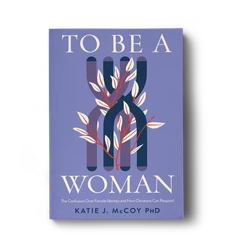
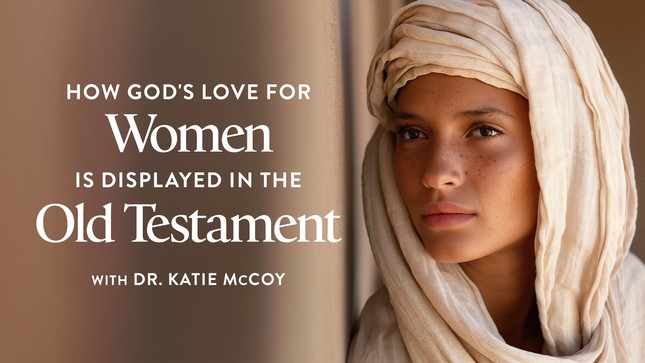
Dannah: What a fascinating discussion! That’s Kelly Needham, speaking to Dr. Katie McCoy about how women are addressed and treated in the Old Testament. Hey, there’s a video of their conversation. You’ll find a link to it in the transcript of today’s program, at ReviveOurHearts.com or on the Revive Our Hearts app. Also, in the transcript is where you’ll find a link to order Katie McCoy’s book To Be a Woman.
Some of the laws in the Old Testament have to do with rather body-centered things, like menstruation and childbirth and sexual intercourse. That’s where Katie went next in the message she gave at a recent True Woman conference.
Katie (at a conference): Let's talk about the biological laws. These are pretty interesting. Has anybody read the laws on periods and childbirth and felt a few feelings about them? Yeah. Why? They make us feel like women are being excluded or punished for something that is not their fault.
I mean, God made us with periods. Why in the world would He be punishing women for them? Well, He's not. Let's look at why.
In biblical law, there are specific categories. All throughout Hebrew law—and indeed Hebrew culture today, among practicing Jews—there is a value of distinction. Keeping clear categories and boundaries, making sure that those categories are not blurred and those boundaries are not crossed.
In biblical law, everything is either common or holy. Now, if you're common, that doesn't mean common is not valuable. No, no. It just means you're not holy. You're not set apart. Holy does not primarily mean righteousness. It means set apart for the Lord, consecrated, cut away for God. Everything else and everyone else is common.
So you can already think about different objects in the temple, those are holy. The priests, those are holy unto the Lord. Everyone else is common.
Now, everything that is common can also be one of two categories—kind of subcategories. If you're common, you can be clean or unclean. Now, if you are clean and common, that means that you can come into the presence of the holy things. You could go into the temple. But if you are common and unclean for some reason, then you may not go into the presence of the holy things. You may not have contact with things that are holy and set apart unto the Lord.
Now, when we hear “clean” and “unclean,” we typically hear that through the lens of “you’re guilty” or “you’re innocent.” That is one category that refers to moral cleanness and moral uncleanness. But what we're going to be talking about today is not moral or immoral—it’s simply ritual.
Ritual cleanness and uncleanness addressed how people lived, interacted with one another, and how they lived in worship unto the Lord.
So for instance, if I, just as a human being, am walking along and then come into contact with the carcass of a dead animal, I am ritually unclean. What that means is, if I were to hug you, you are now ritually unclean. It's like cooties, right? And because now we're both ritually unclean, we have to wait a full day, and then we have a wash—we have a bath—and then we are restored to being clean.
Now, up until this point, nobody's done anything wrong. However, if I were to come into contact with a dead carcass of an animal, and knowing that I am ritually unclean, and then I were to go present a sacrifice to the Lord in the temple, oh . . . line crossed. That is serious. That is profaning—treating as common, as unworthy, the holy things of God.
At that point, I could expect very serious punishment, because I have chosen to come to God on my terms and not His.
All of these laws are didactic. They are teaching the people of God something. And what they have in common, whether we're talking about menstruation or childbirth, is the ritual uncleanness that occurs with the flow of blood.
Any time blood appears in the Old Testament, it is to be treated with respect, because the Lord says, “The life is in the blood.” And what do we know about the purpose of the law? The law is, as Galatians 3 says, “our tutor to Christ.”
What the Lord is doing through His law—specifically the passages related to how to treat blood, no matter where or who it comes from—is He is preparing His people to honor and revere the blood of the Lamb that would take away the sin of the world.
Can you see how this is all pointing us to the Lord Jesus?
There's something else though in these laws that you'll find as we dig into them. They also helped keep the spread of germs to a minimum. This is before antibacterial gel, wipes, antibiotics. This is before modern medicine. It’s before people even knew about things like germs. We see a lot of these laws, we find that the obedience of them helped mitigate the spread of infection and disease.
Now, that's not the primary purpose. The primary purpose is to reveal God. But like all of God's laws, those things that reveal God are also for our good. They are also for the good and the benefit and the health of humanity.
So, let's talk about the menstruation laws in Leviticus 15. I'm going to summarize this for you, just for the sake of time. This passage describes normal period, and for a normal period, you are ritually unclean for seven days.
One time, I was explaining this to a group. There was a group of seminary students, and one of them was a very young man who raised his hand and said, “Why seven days?”
I said, "Somebody else is going to have to explain that one to you."
But with the menstruation laws, you're ritually unclean for seven days, and that means anyone who comes into contact with you is also ritually unclean.
Now, you have the option to self-isolate, to stay at home, but you don't have to. You're welcome to go outside of your house. You just have to let people know, “I am in my time of uncleanness,” or, as I think it was, Rachel said, “It's the way of the woman,” or “the way of women,” right? So once people knew that, they would know, “Okay, if I were to touch her or give her a hug, I would be ritually unclean as well.”
The other restriction is that her husband could not have sexual relations with her. This is total abstinence for seven days. We'll talk about why that's important in a moment.
There's also some interpreters who say that anything that she touched while she was on her period also became ritually unclean, so things like household items. That's why she has her own bed. She sleeps in her own bed. She has a separate bed. She has a separate chair. And then also, she is not permitted to go to a place of worship—anything that would be holy.
So the way this works, ladies, is that God's law is so oppressive that when you are on your period, the God of the universe wants you to go lay down. You need to take a break. You need to rest.
Oppressive? Is God's law oppressive on this one? Yeah, I don't think so either.
There are modern companies that are celebrated for giving women “period days.” They're not sick. They just recognize that she just needs to work from home today, and we celebrate them. Oh, my goodness, so progressive. Say, "Leviticus."
Let's talk about the childbirth laws. The childbirth law is very easily misunderstood.
So after a woman has a baby boy, she is ritually unclean. So again, she hasn't done anything wrong. She's ritually unclean for seven days. All those previous restrictions apply—abstinence in marriage, don't come into contact with the holy things. And then the uncleanness is transferred to someone else for the period of a day, then you have to have a washing, that type of thing.
But she is unclean for seven days, and then thirty-three . . . Now, why didn't God just say forty? Here's why:
What happens, if you have a baby boy, on day eight of that baby boy's life? Circumcision. Can you imagine the trauma for the entire family of the dad having to take care of the baby boy when he's being circumcised and mom is hours away? Horrible.
That also would be so bad for the mom. Not only is she missing this very important ceremony in the life of her infant son, but she's at home worrying about him.
So seven days, then it's sort of suspended on the eighth so that she can be with the family during the son’s circumcision, and then we're right back to ritual uncleanness for thirty-three days—7 + 33 = 40. How much time is it again that a woman's body needs to fully recover after giving birth? About six weeks, forty-two days. Isn't that interesting?
Now, when she has a baby girl, it's all doubled. Why is it doubled? Is he punishing her? That's what a lot of people think. They think she's being punished. “Oh, she's being punished. She had a baby girl. She brought another baby girl into the world. Had she brought a baby boy, she would be unclean for half the time.”
Well, if you have a baby girl, that actually means you have another forty days of mandatory maternity leave, mandatory rest.
Do we know why God doubled it? We really don't. It's an argument from silence. Some people have said she's being punished. We know that's not true.
For one thing, the sacrifice that she brings at the end of her time of purification is exactly the same if she had a boy or a girl. If this was about punishment, you would expect this to be a different kind of sacrifice. It's not. This isn't about punishment. She certainly hasn't done anything wrong by fulfilling the creation mandate to be fruitful and multiply. God knows how He made women to have babies, right?
Another theory says that she is serving another forty days of uncleanness for her baby girl, who will one day become ritually unclean. That is an interesting theory, but here's where it falls apart: one, nowhere else in Scripture do you see someone ritually unclean for something that might happen years in the future. It's always right here, right now. That also fits with the whole didactic teaching purpose of the law.
Along with that, who are the only people in the Old Testament who represent someone else in terms of cleanness or uncleanness and standing before the Lord? Who are they? The priests. So I throw that theory out too.
The only one that makes sense, again, it’s an argument from silence. I'll give you the Cliff Notes version for the sake of time. About one hundred years ago, a Jewish doctor who taught at Johns Hopkins University decided to study the biology of women who had just had a baby boy and women who had just had a baby girl. He found one hundred moms of boys, one hundred moms of girls, and he studied lochia—basically, the woman's discharge after you have a baby. Your body is still flushing things out.
Here's what he found: among the moms who had just had a baby girl, at the same number of weeks, they had a higher level of bacteria that their body was still flushing out. So much so that this doctor concluded this really could have been about public health. This could have been that the Lord just knew a woman's body needs more time to get back to normal, more time to flush out bacteria.
Did you know? And again, this is before modern medicine and antibiotics. Sexual activity before a woman's body is healed after childbirth, and then also sexual activity during menstruation. The pH levels are different, the dilation of the cervix is different, the vulnerability to sexually transmitted infections is different, things like pelvic inflammatory disease for which there was no medicine thousands of years ago. What if it was all about protecting women? Amazing, isn't it?
Dannah: Once we start looking below the surface of the laws in the Old Testament, we see God’s love for women displayed in some beautiful ways. We’ve been listening to a message Dr. Katie McCoy gave at a recent True Woman conference. She’ll be back with more tomorrow on Revive Our Hearts. There’s a link to her book, To Be a Woman, embedded in the transcript of this program. You’ll find that at ReviveOurHearts.com or on the Revive Our Hearts app. Just look for today’s transcript.
It’s not too late to request your copy of our Bible study on Ruth for a donation of any amount. In this study, you’ll see how Ruth moved from broken to beautiful, as God provided for her, transformed her life, and restored her to a place of honor. The title of this six-week study is Ruth: Experiencing a Life Restored, and you can go through it on your own or with a group of friends. Ask about it when you contact us with your gift. To make a donation, visit ReviveOurHearts.com/donate, or call us at 1-800-569-5959.
Revive Our Hearts is a global ministry. That means we’re impacting women not only in your community, but in many countries and languages around the world. I’d like to invite you to check out what we’re saying where and in what language at this page on our website, ReviveOurHearts.com/global.
Tomorrow Dr. McCoy is back with more on Old Testament laws related to women. Specifically, laws on assault and what Katie McCoy calls “coerced disgrace.” She’ll explain tomorrow. Please be back for Revive Our Hearts.
This program is a listener-supported production of Revive Our Hearts in Niles, Michigan, calling women to freedom, fullness, and fruitfulness in Christ.
*Offers available only during the broadcast of the podcast season.