
For most things in life, I tend to be an optimist. I’m usually a glass-half-full kind of person—or even a whole-glass-full person. As I’ve told my husband, even the empty part of the glass is full of air! Yet some situations feel so hopeless that I struggle to imagine how God could bring good from them.
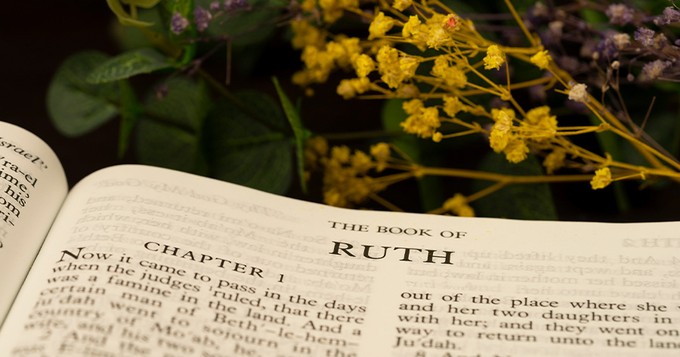
However, God has been showing me that this attitude reveals how little I trust Him to work in these situations—and how distorted my view of Him can become. Recently, He’s been using the book of Ruth to help me see this more clearly.
In this Old Testament story, Israel was experiencing a famine. So Elimelech packed up his wife, Naomi, and their sons and moved to Moab. After some time, Elimelech died, followed by his two sons—leaving three widows in extremely vulnerable positions.
Naomi and Ruth both faced heartbreaking circumstances, but they responded in very different ways. Naomi allowed bitterness to take root in her heart, while Ruth chose faith, humility, and gratitude. Their examples show two paths we can take when circumstances feel hopeless.
Naomi: A Heart Hardened by Bitterness
Scripture doesn’t tell us how Naomi felt about leaving Israel and everything she had known her whole life. We don’t know how she responded to her sons’ marriages to Moabite women.
But I wonder if, over time, all of this wore on her spirit. As she watched her husband and both of her sons die—leaving her in a foreign land, responsible for two daughters-in-law, with no clear way to provide—I imagine she felt hopeless. Where was God in all of this? Had He abandoned her?
Naomi chose to return to her homeland, but she urged her daughters-in-law to go back to their families. Even when Ruth clung to her, Naomi encouraged her to return to “her people and her gods” (Ruth 1:15). She told Ruth to go back to a place where she would be surrounded by false gods—essentially a life without the one true God.
As we look at how Naomi chose to respond, her story offers a warning about how difficult circumstances can affect our hearts.
Naomi allowed bitterness to gain a foothold.
The journey from Moab back to Bethlehem would have taken Naomi and Ruth about seven to ten days on foot. That’s at least a week of constant walking over difficult terrain—and plenty of time for Naomi to think about what she once had and what she no longer possessed as she returned.
As she trudged toward Bethlehem, small murmurings against God may have grown with each step until they deepened into bitterness. We see evidence of that in how she responds to the women in Bethlehem:
“Don’t call me Naomi. Call me Mara . . . for the Almighty has made me very bitter. I went away full, but the Lord has brought me back empty. Why do you call me Naomi, since the Lord has opposed me, and the Almighty has afflicted me?” (Ruth1:20–21)
Naomi was so consumed by bitterness that she allowed it to redefine her identity. The name Naomi means “pleasantness” in Hebrew. But she rejected that name and instead embraced a new one: Mara, which means “bitterness.”
Have you ever been there? Feeling upset and cheated because life didn't go the way you’d hoped? Watching others receive what you long for and wondering why they get it and you don’t?
When we dwell on those thoughts,what begins as a tiny shoot of discontent can quickly grow into thorns of bitterness that overtake our hearts and choke everything else out.
Naomi’s bitterness distorted her view of God.
Not only did Naomi allow her circumstances to shape her attitude and spirit, but she also let them color her view of God. In Ruth 1:20–21, she refers to Him as Almighty (El-Shaddai) and Lord (Yahweh)—names that speak of God’s sufficiency and His faithfulness to meet His people in their need.
Yet Naomi didn’t feel that God had lived up to His names:
“I went away full, but the Lord has brought me back empty . . . the Lord has opposed me . . . the Almighty has afflicted me.” (v. 21)
Naomi did not believe God had been all-sufficient in her life.
Her perspective was shaped more by her feelings and the tragedies she had experienced than by the truth of who God is. Did God really make Naomi bitter? Or was that her own response to what she endured?
Unfortunately, I can often see shades of Naomi in my own heart. I let myself ride the roller coaster of emotions rather than grounding myself in the foundation of God’s unchanging nature and character. Instead of being tossed by those ups and downs, I need to anchor my heart in the truth of God’s Word and who He is.
Naomi missed the blessings God had given her.
Because Naomi was so focused on her losses—her husband and sons—she missed seeing the blessings God had given her even in the midst of her sorrow:
- She was able to return to her homeland, where people knew her and cared about her.
- When she left, Israel was experiencing a famine, but she returned at the beginning of the harvest—a season or provision.
- Naomi’s life wasn’t empty. She had someone who deeply loved her and was completely committed to her: Ruth.
I can relate to Naomi. It’s easy to focus on what I don’t have and overlook everything God has already given me. When that happens, it helps to recall the greatest blessing of all—salvation through Christ—and remember that God has blessed every believer “with every spiritual blessing in the heavens in Christ” (Eph. 1:3). When I choose to view my life through the lens of gratitude rather than scarcity, it changes how I see everything.
While Naomi shows us several ways we might wrongly respond to hopeless circumstances, Ruth chooses a different path.
Ruth: A Heart Anchored in Faith
Ruth was a Moabitess from a pagan nation, and when her husband died she faced uncertainty and loss. Staying in Moab meant returning to a family and culture far from the one true God. Going to Israel with Naomi meant becoming an outsider in a foreign land where she might face suspicion or hostility.
Yet despite these daunting circumstances, Ruth stepped forward in faith, allowing an attitude of humility and gratitude to guide her heart.
Ruth chose to follow God.
Although Ruth grew up in a culture that did not worship God, along the way, she learned something about Him. We see evidence of that in her declaration to Naomi:
For wherever you go, I will go,
and wherever you live, I will live;
your people will be my people,
and your God will be my God.
Where you die, I will die,
and there I will be buried.
May the Lord punish me,
and do so severely,
if anything but death separates you and me. (Ruth 1:16–17)
In a sense, Ruth was doing what Naomi had once done when she left Israel for Moab—leaving her homeland for the unknown. But Ruth’s decision was different. She was turning her back on a past that did not include God and stepping forward in faith to follow Him.
Like Naomi, she had lost her husband and had no clear picture of the future. But we don’t see any hints of bitterness in her response. Instead, she faithfully served Naomi and placed her trust in the Lord.
When things look impossible, Ruth reminds me that I have a choice. I can focus on the uncertainty of a situation and allow fear to control me. Or I can remember who God is and step forward in faith, trusting Him to work according to His plan and purposes.
Ruth responded with humility and gratitude.
Rather than dwelling on what she had lost, Ruth focused on the opportunities God placed before her. She was willing to glean in the fields—hard, back-breaking work. Her character did not go unnoticed. Boaz told her, “All the people in my town know that you are a woman of noble character” (Ruth 3:11).
Ruth approached her circumstances with humility and gratitude. When Boaz offered her protection and allowed her to continue gleaning in his field, she recognized that he owed her nothing. She never forgot she was a foreigner and undeserving of such favor.
At times—even subconsciously—we can begin to feel as though God owes us blessings. We can be like the workers in the parable in Matthew 20:1–16 who believed they deserved more. But when we shift our thinking from what we think we’re owed to recognizing that everything we have is a gift, our hearts are filled with gratitude. And that heart attitude helps us face the unknown with confidence because we trust the One who holds the future in His hands.
Ruth trusted God to care for her.
The scene at the threshing floor can be difficult to understand, yet one thing stands out clearly: Ruth was willing to trust.
She took a risk by visiting Boaz at night. When Naomi instructed her to wash, put on perfume, wear her best clothes, and go lie down at his feet, Ruth simply responded, “I will do everything you say” (Ruth 3:5).
Ruth trusted Naomi’s wisdom. She trusted Boaz’ integrity and discretion. And ultimately, she trusted the Lord to protect her and provide a kinsman-redeemer.
When Naomi told her to “wait until you find out how things go” (Ruth 3:18), we see no evidence that suggests Ruth was anxious or impatient. Instead, Ruth displayed a quiet heart that was willing to wait for the Lord to work.
Like Ruth, we’re called to trust God and obey Him even when we don’t fully understand. Her example reminds me that trusting the Lord often means quietly waiting and choosing to place my fears in His hands.
What Will We Choose?
Naomi isn’t the bad guy of this story, and Ruth isn’t someone we should put on a pedestal. By the end of the book, Naomi’s heart had changed. She saw how God had provided for both her and Ruth, and her eyes were opened to His goodness and care.
Both women provide insight for us when we face circumstances that seem completely hopeless. The question becomes: Do I want to take Naomi’s long road through bitterness, or do I want to follow Ruth’s example and trust God with humility and gratitude?
The road ahead may still be long, but how will my choices affect my heart along the way?
We may look at the path before us and think that there’s no way forward to a good outcome. Yet the Lord is the One “who makes a way in the sea, and a path through raging water” (Isa. 43:16). And while situations may seem impossible to us, “with God all things are possible” (Matt. 19:26).
As Nancy DeMoss Wolgemuth has said, “For those who are in Christ, there’s always a bigger, better story being written than we can imagine.” 1 As I face my own impossible circumstances, I want to choose the road of Ruth—trusting, grateful, and faithful—knowing that God is writing His story in my life, even when I can’t see how some things will unfold.
1 Nancy DeMoss Wolgemuth, CSB Notetaking Bible, Revive Our Hearts Edition (Holman Bible Publishers, 2025), 258.
It’s a great place to jump in. Whether you’ve been reading with us or are just getting started, you can join right where we are as we read through the Bible together—one day at a time—seeking to know God more through His Word
Start with us tomorrow and experience the beauty of God’s faithfulness unfolding in everyday lives.
Join us right where we are. 📖✨


Join the Discussion