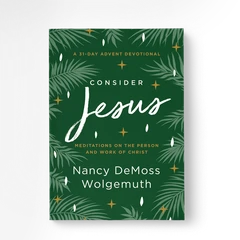

This episode contains portions from the following programs:
"Made to Tremble"
"When Panic Attacks"
"God Is in the Midst of His People"
-----------------------
Dannah Gresh: According to the National Institute of Mental Health, 23 percent of women in the U.S. face an anxiety disorder. Anxiety doesn’t skip Christian women . . . neither does suffering. But suffering with Jesus is never empty. He meets us there—and gives it hope and purpose.
Just a few years ago, I began to experience panic during the night when I was trying to sleep! At first, I suffered for many hours each time it happened, until finally—usually right after a 2 a.m. run to the kitchen for peanut butter toast—I would fall asleep. The more tired I grew as this problem went on, the louder the anxious voice in …
This episode contains portions from the following programs:
"Made to Tremble"
"When Panic Attacks"
"God Is in the Midst of His People"
-----------------------
Dannah Gresh: According to the National Institute of Mental Health, 23 percent of women in the U.S. face an anxiety disorder. Anxiety doesn’t skip Christian women . . . neither does suffering. But suffering with Jesus is never empty. He meets us there—and gives it hope and purpose.
Just a few years ago, I began to experience panic during the night when I was trying to sleep! At first, I suffered for many hours each time it happened, until finally—usually right after a 2 a.m. run to the kitchen for peanut butter toast—I would fall asleep. The more tired I grew as this problem went on, the louder the anxious voice in my head got. Until finally, I thought, Dannah, you have Jesus! And what I did next changed everything for me. Later in the program, I’ll tell you what worked for me to calm my anxious heart. You’ll need a Bible and a good set of walking shoes.
What might it look like in your life to not only survive anxiety, but actually magnify Christ in the midst of it? That’s what we’re talking about today! I’m your host, Dannah Gresh. You’re listening to Revive Our Hearts Weekend.
Blair Linne says anxiety has been one of the best things to happen to her faith. How does that sit with you? Well, I think, when you hear Blair’s testimony, you’ll feel hopeful about your own battle.
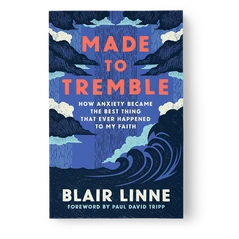
Blair is a wife, a mom, and a spoken word artist. She is also the announcer for a new podcast and radio program from Revive Our Hearts coming next year. And Blair has written a book to help women combat anxiety. It’s called Made to Tremble.
In her book, she explains that a season of intense anxiety began after running into a deer with her whole family in the car. Blair was grateful everyone was unharmed, but that moment would lead to panic attacks and an all-day every-day anxiety she couldn’t shake. She realized she needed to seek spiritual and practical help in community. That’s where we’ll pick up her story.
Blair Linne: My next step eventually was to get a counselor. And actually, in the acknowledgements of my book, I mention Revive Our Hearts. I’m going to read the acknowledgements here: “Thank you to Nancy Wolgemuth and Revive Our Hearts, who, when I had to pull out of a conference in 2017 due to crippling anxiety, recommended a counselor and suggested rather than return the honorarium, they encouraged me to use it to pay for my first group of counseling sessions.”
I’m just so grateful for that! We were a young family in ministry, on a very strict budget at the time, and that was really a means of grace, to recommend that counselor and get me going with seeing someone who could walk me through what was happening and give me the tools to find help and to find hope.
I met a beautiful counselor, via recommendation, who walked me through it. It was wonderful! Opening every session in prayer, leading me to the Scripture, and sharing with me breathing techniques that were helpful when those panic attacks would come.
I remember her encouraging me, because I literally had to learn to drive again. I would drive for ten minutes, and then I would start hyperventilating. And her encouragement to me was to play Christian music and to cry out to God. The Lord really met me again and again.
That really was my comfort; it was seeing God for who He is and realizing, “Well, He’s not anxious!” My God is never biting His nails; He’s never hyperventilating; He’s always at peace. He is peace.
And so, if I know that He’s with me, it doesn’t matter the level of affliction or suffering, I can have peace in the midst of it. Even if I die. I mean, literally, even if I die, death is not a bad thing for a Christian.
I had to reconcile that in my mind because I think, in those moments, I was afraid to die. And I wondered about that: “Well, I’m a believer; I know the information about death.” But in a sense, I had to wrestle with God to say, “Okay, I could be satisfied with this. It would be okay with leaving my husband and my children in the hands of the Lord.”
Because often, when it comes to sinful anxiety, it really can be about control. We want to be in control. We have these concerns, we have these cares, and so we think ruminating over it, thinking about it, is going to allow us to have some sense of control.
But it’s a false sense of control. There is only One who is in control! He has sufficient resources. He’s not divided. He is the God of peace who is with us. When we realize that, we can relinquish control. There’s a lot of peace that comes from the God of peace.
Dannah: Blair is telling us some ways God helped her combat anxious thoughts after a car accident. During panic attacks, Blair couldn’t breathe. She got help for this problem from the example of Joni Eareckson Tada. Joni’s been confined to a wheelchair with quadriplegia for close to sixty years.
Blair: I remember hearing her pray one time. She prayed and asked God to help her breathe. It just struck me because I never heard anyone ask that of God. And the reason it struck me is because I thought, We all need God's help to breathe! We don’t breathe on our own.
Her circumstances caused her to rely upon God in a way that, maybe if she didn’t have those circumstances, maybe she would have been tempted—like we often are—to not ask God for the things that she or we need.
Certainly, I’m in a different trial or different affliction, but I have had to ask God for help to breathe. I’m grateful for that, because what it does is it helps me to see my humanity. It helps me again to see that I don’t have the resources. I’m not in control. In seeing that, I then go to the One who is in control.
I go to the One who is holding the universe together! Colossians says my mind is being held together by God, my body is being held together by God (see Col. 1:17). And so anything that would cause us to see that I think is a good thing!
It’s working good in our life, even though we don’t say that anxiety is a good thing. But God uses every trial in our life to help us to rejoice in the Lord, to be able to see our dependence upon Him.
Dannah: He does indeed. That’s Blair Linne, magnifying Christ’s strength in the midst of her anxiety. The experience of anxiety wasn’t easy. But it helped her to see, really see, her need for Jesus—and this has changed her life in the sweetest way.
When we feel our need for the Lord, we can run to Him with our every anxious thought. That’s what our next guest, Paul Tautges, encourages us to do.
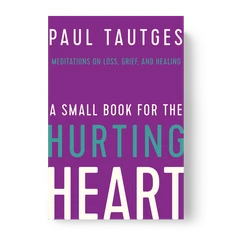
Paul is a husband. He’s a father to ten children. He’s a pastor in Cleveland, Ohio, and the author of several books, including A Small Book for the Hurting Heart. I talked with Pastor Paul not too long ago. Lean in for some advice on what to do when anxiety threatens to rule our lives.
----------------
Dannah: There’s a difference between responding to fear and anxiety and living under it. What advice do you have for someone who’s living under it?
Paul Tautges: Let me just put it in first person. This is what I do: I have to run to the Lord. That’s the first thing I have to do. I have to go to God’s Word, meditate on some of His promises that assure me that no matter what threatens me, He is my protector. He has all things under control—like it was in the life of Joseph. But somehow, even though I can’t see it right now, He’s going to be working these things together for my good and for His glory.
Prayer is significant. As the apostle Paul teaches us in Philippians chapter 4, prayer is a key piece in the ongoing fight against anxiety.
But I think also we’ve got to guard our hearts from isolation. Sometimes we feel like we’re the only ones going through this, and, therefore, we’ve got to fight through it on our own.
But to have some people who are, in a sense, your prayer lifeline people—sisters in Christ in your church that you can just text and say, “I’m really struggling this morning with panic, could you pray for me? Or could you pray with me?” I find, personally, more help when someone prays with me than when they say, “I’ll pray for you today.”
When you just pick up the phone . . . use the phone for something more than just texting and looking up websites. But, to actually call someone and be able to pray together, it’s powerful.
Dannah: It really is. How does anxiety fit into our faith walk?
Paul: Well, I think they need to understand first that it is a common struggle. It certainly can become sinful, depending on how we respond to it. Most of the time, it just occurs. It’s not like we decided today we’re going to be anxious. It’s just there. I think it’s a constant reminder to us of how dependent on the Lord we’re supposed to be.
It was years ago that I was reading a book. It was either by Ed Welch or David Powlison, one of the two. He made the statement, “‘Do not fear’ is the most common command in the Bible.” That really hit me. I thought about that. “Okay, so God reveals Himself to us through His Word. Because He made us, He understands fully how we work. He understands that we need this constant assurance, “Do not fear; I’m with you. Do not fear; I’m your refuge. Do not fear; I’ll bring good out of this.” So that’s a good reminder for us. Then to talk to Him about that.
Praying Scripture is really helpful to me, to do more than just read. Reading Psalm 46 can certainly bring me some comfort, but when I stop, and I actually pray through that, and I insert into my prayers the very specifics of this particular situation. Like, “What do I feel threatened about? Is it a conflict with people? Is it a fear of something unknown in the future that maybe I’m trying to control?” I can work through a psalm in particular, pray through that.
Dannah: You really do grow in intimacy with the Lord when you do that, because a psalm is a beautiful poem until you need it, and then it’s medicine.
Paul: Absolutely.
Dannah: And it hits different, doesn’t it?
Paul: It does. Yes.
Dannah: Take me to one of the psalms that has been a medicine to your soul during one of your battles.
Paul: Psalm 27 is very significant for me. It’s also one of those refuge or fear kind of psalms. David begins with this:
The LORD is my light and my salvation.
Whom shall I fear?
The LORD is the stronghold of my life.
Of whom shall I be afraid?” (v. 1)
And then he goes on to recount some of the specific causes of his fear, the things that are provoking the anxiety in his heart. But, the way he begins that is very significant. He first declares truth to himself. “The Lord is my light and my salvation. Whom shall I fear? The Lord is the stronghold of my life. Of whom shall I be afraid?”
It’s kind of like what Martyn Lloyd-Jones used to say in his preaching and, specifically in Psalms 42 and 43, in his book, Spiritual Depression. He talks about the difference between talking to ourselves and letting ourselves talk to us.
Once you hear that, you begin to see this pattern, especially in the Psalms. And that’s what David is doing here. He’s recognizing that, “Okay, anxiety wants to talk to me, wants to take control and dictate, wants to be in the driver’s seat of my life today. And what I need to do in order to put that anxiety in the back seat of the car is I’ve got to declare to myself what is already true about God.” It’s a God-centered truth that brings the equilibrium back, so to speak.
Dannah: It’s amazing how it works. I think one of the things that’s interesting about Martyn Lloyd-Jones mentioning that you talk to yourself is that what so often the psalmist tells himself is he reminds himself of who God is.
Anxiety is exalting these problems up so that they’re bigger than God. They’re going to overcome me. Right? So that means they must get through God. And the Psalms remind us, “No. We’re in His hand. We’re under His wing. He’s the refuge that we’re climbing up into.”
Paul: Yes.
Dannah: But you have to climb up into that refuge. You do have to climb up into that tower.
Paul: Yes, you do.
Dannah: That’s kind of what you’re talking about doing.
Paul: Yes. And to get back to the jargon of the car illustration, you’ve got to put your hands on the steering wheel. You can’t just let anxiety take control and drive that car.
My wife and I have been really blessed by the Lord. We have ten children and a growing tribe of grandchildren. It’s wonderful, but sometimes anxiety feels like and sounds like . . . The noise it creates in our hearts sometimes sounds like four or five kids in the back seat, or the back couple seats, of the van. They’re bickering, they’re arguing, they’re fighting about something.
You’re trying to drive. You’re trying to concentrate, but you’re constantly having to look back over your shoulder to see and deal with those things. I think sometimes the cares that Jesus speaks about in Matthew 6 are like that. They’re like all these noisy children that are crying out for us to help or fighting with each other, just creating a lot of noise. That’s what anxiety does. It creates a lot of noise in our soul, and what we have to do is, even as Psalm 46 ends, “Be still and know that I am God,” (v. 10) which is a command.
Dannah: Yes.
Quiet your heart. So you do have to do something. You can’t just sit and wait, kick your feet up in your spiritual recliner and wait for it to go away. You’ve got to do something.
So I think that’s where anxiety is a blessing because it can retrain us as to how we respond to the pressures of life. As we learn to put our hands on the wheel, speak truth, biblical truth, to ourselves, and let the Holy Spirit then massage those biblical promises and those God-centered thoughts deep into our soul.
Dannah: That’s Paul Tautges. When we run to Jesus with our anxieties, we’re confessing that He is an able Helper. Run to Him. He wants to be your safe place today and always.
That’s the truth Nancy DeMoss Wolgemuth is closing us out with. A while back we shared a series on our daily program called “A Mighty Fortress Is Our God” based on Psalm 46. We’re gonna focus on verse 5, which is talking about the nation of Israel. It says, “God is in the midst of her; she shall not be moved; God will help her when morning dawns.” Here’s Nancy to unpack these hope-filled words for an anxious heart.
Nancy: The verse goes on to say, not only will we not be moved, defeated, destroyed, but God will help her when morning dawns. He’s the only sure help and hope for His people.
Scripture reminds us over and over again of the futility, the foolishness of looking to anyone or anything else for help. Psalm 60, “Oh, grant us help against the foe, for vain is the salvation of man! With God we shall do valiantly; it is he who will tread down our foes” (vv. 11–12).
Psalm 146, verse 3, “Put not your trust in princes, in the son of man, in whom there is no salvation.” Listen, princes, like your Prince Charming, can seem wealthy and handsome and secure, but God says, “Don’t put your hope there.”
Verse 5, “Blessed is he whose help is the God of Jacob, whose hope is in the LORD his God.” The great hymn writer and co-founder of the Methodist movement, Charles Wesley, was preaching once in the fields of Ireland when he was attacked and pursued by a mob who disapproved of his doctrine. So he sought refuge in the house of a local farmer, and the farmer’s wife sent him out to hide in the milk shed.
But shortly, the angry mob arrived at the house and demanded to know where Wesley was. The farmer’s wife offered the opponents, the pursuers, something to eat, and while they were snacking, she went out to the milk shed and told Mr. Wesley to go out through the window and to hide under a nearby hedge that was located next to a brook.
It was in that place, hiding from his pursuers, with their cries echoing all around him, that Charles Wesley wrote what some have called the greatest hymn in the English language, "Jesus, Lover of My Soul." Let me read the second stanza to you and picture him under that hedge next to the brook:
Other refuge have I none, hangs my helpless soul on Thee;
Leave, oh! leave me not alone, still support and comfort me.
All my trust on Thee is stayed, all my help from Thee I bring;
Cover my defenseless head with the shadow of Thy wing.
I don’t know that there’s any line in hymnody that is more precious to me than that one. I’ve cried that out so many times, “O, Lord, cover my defenseless head with the shadow of Your wing.” And though we may be defenseless, what safer place is there to be than under the shadow of the wing of our Helper God?
“God will help her when morning dawns,” literally, at the turning of the morning, at the break of day. It’s so often true in Scripture that dawn, the breaking of the day is seen to be the time of God’s help.
He may not come immediately; it may not seem that He is coming to our aid immediately, but He will come. Sometimes we have to go through the night first before we get to the break of day. The night may seem long, it may seem endless, but we need to remind ourselves, and remind each other, that dawn is ahead. With the dawn of the day will come His supernatural, right-on-time help.
“Weeping may endure for the night,” Psalm 30 says, “but joy comes,” when? “in the morning” (v. 5). Something that just struck me as I was thinking about this last night, it’s not that God is not working during the night, it’s not that God is sleeping during the night, and then He wakes up when the sun comes up and says, “Oh, I think I’d better go down and help those people.”
It’s just that in the light of dawn we can see what we couldn’t see during the night, and that is, how He was helping us! As the morning light dissipates the shadows of night, so the rising of the Son of Righteousness signals the dispersing of the darkness of evil and adversity.
God is working all through the night. He was in that Red Sea situation. He was during the night with the Assyrians. He was working. But when it’s dark, we can’t see what God’s doing, and that’s why I love that quote by Pastor John Piper, “In every situation God is doing a thousand different things that we cannot see and we do not know.”
It may be “night” where you live right now and you think, “Nothing’s happening, nothing’s changing. Is God really working?” The Scripture says, God will help at dawn, and what I think that’s really saying is that at dawn you will see how God has been helping. God is a helper, and He will disperse and dissipate the night.
Let me just remind us that His help is not just extreme emergency situations, much as we need it then, but it’s for every day, because every hour I need Thee. Right?
The steadfast love of the LORD never ceases, his mercies never come to an end; they are new every morning; great is your faithfulness. (Lam. 3:22–23)
If I can quote my friend Matthew Henry again, he says,
This may be applied by particular believers to themselves [that means you can apply it], if God be in our hearts, in the midst of us, by his word indwelling richly in us, we shall be established, we shall be helped; let us therefore trust and not be afraid; all is well, and will end well.1
As I meditated on this verse, Psalm 46, verse 5, “God is in the midst of her, she shall not be moved, God will help her when morning dawns," I couldn’t help but think of a hymn that is familiar, perhaps, to most of you. Let me just read the words, and let’s affirm them in our hearts:
How firm a foundation, ye saints of the Lord,
Is laid for your faith in His excellence Word!
What more can He say than to you He has said,
To you who for refuge to Jesus have fled?Fear not, I am with thee, O be not dismayed,
For I am thy God, and will still give thee aid;
I’ll strengthen and help thee, and cause thee to stand
Upheld by my righteous, omnipotent hand.
When through fiery trials thy pathway shall lie,
My grace, all sufficient, shall be thy supply;
The flames shall not hurt thee; I only design
Thy dross to consume, and thy gold to refine.
Dannah: Nancy DeMoss Wolgemuth, encouraging you to take refuge in the Lord.
That’s what I finally did with my anxiety—the kind that kept me awake at night, fearfully and panicked. When I realized I could take refuge in Jesus—not Netflix or peanut butter toast—I decided I needed to do it practically. So, I memorized Psalm 91–a promise that we will “not fear the terror of night.” I walked while I memorized because I thought maybe physical exertion might wear me out. It’s always good to do practical things to battle for our mental health! Well, the walking and the Scripture together turned out to be what helped me win the battle. I’m still walking. Still meditating on the Psalms . . . four years later! Maybe give it a try. Go to the Lord as your refuge.
But know this: anxiety will not last forever. Morning always, always dawns. And the Lord will be your mighty fortress while you wait for relief. May your testimony be that He has been good to you in the midst of anxiety. What a beautiful way to magnify Him!
So many women in Scripture faced circumstances that might have undone them, had the Lord not been their refuge, too. Women like Hannah, who pleaded with God through barrenness; the woman at the well, who would have withered in her sin had Jesus not offered her living water; or Mary of Nazareth, who could have crumbled when the angel told her she’d carry the Savior in her womb, but instead said “Yes, Lord.” You can explore each of these stories and more in our new study, Devoted. It’s a beautiful resource based on Nancy’s teaching over the years, and we’d love to send a copy your way when you donate any amount. To give and request the Devoted study, visit ReviveOurHearts.com.
Next weekend, we’re going to dive into some of these women’s stories and explore what it looks like for a woman to say “Yes, Lord!” even in the hardest of circumstances. There’s so much for us to learn from the women gone before us—especially those in God’s Word.
Thanks for listening today. I’m Dannah Gresh. We’ll see you next time for Revive Our Hearts Weekend.
This program is a listener-supported production of Revive Our Hearts in Niles, Michigan, calling women to freedom, fullness, and fruitfulness in Christ.
*Offers available only during the broadcast of the podcast season.