
Sheep in His Pasture
Claire Black: Welcome to True Girl, a podcast for girls and their moms. I’m Claire Black. Together, we’ll explore God’s truth for us, one drive at a time.Buckle up! You’re about to grow closer to each other and closer to Jesus!
So far in this season, we’ve learned that gratitude begins with a joyful noise and that it can steady us when life doesn’t go as planned. But there’s another kind of gratitude that runs even deeper—the kind that comes from knowing exactly who you belong to.
Think about it: one of the scariest feelings is being left out. Like when you walk into the lunchroom, tray in hand, and you don’t know where to sit. Everyone wants a place to belong. And Psalm 100, verse 3 tells us that no matter what, we do belong . . . to God. We are His sheep. His people.
…Claire Black: Welcome to True Girl, a podcast for girls and their moms. I’m Claire Black. Together, we’ll explore God’s truth for us, one drive at a time.Buckle up! You’re about to grow closer to each other and closer to Jesus!
So far in this season, we’ve learned that gratitude begins with a joyful noise and that it can steady us when life doesn’t go as planned. But there’s another kind of gratitude that runs even deeper—the kind that comes from knowing exactly who you belong to.
Think about it: one of the scariest feelings is being left out. Like when you walk into the lunchroom, tray in hand, and you don’t know where to sit. Everyone wants a place to belong. And Psalm 100, verse 3 tells us that no matter what, we do belong . . . to God. We are His sheep. His people.
Today, Dannah Gresh and Staci Rudolph are taking us on a picnic out in the pasture at the Gresh farm, where they’ll talk about what it means to belong to a Good Shepherd.
Staci Rudolph: Oh wow, this is perfect. Sunshine, fresh air, and yummy food. You really know how to do a picnic, Dannah.
Dannah Gresh: I do, Staci, I must admit. I thought we could have a little picnic in the pasture today. I packed fruit, sandwiches, and lemonade.
Staci: And ants, I’m guessing. They always RSVP to picnics.
Dannah: So true! But I have a feeling that ants won’t be our only company today.
Staci: Wait—not the only company? Please don’t tell me Cassie the donkey is planning on crashing this picnic. I don’t think I can share my sandwich with her.
Dannah: Don’t worry. Cassie’s busy arguing with Napoleon, I think. But you might get to meet another furry critter, or should I say wooley critter?
Staci: Carl Epley?
Dannah: Yep—He’s the black sheep of the family—literally.
[a sheep bleats loudly]
Staci: Yep, I see what you mean. Well it’s nice to meet you Carl Epley.
Dannah: He for sure knows the sound of a picnic basket when he hears it!
[Carl bleats louder]
Staci: Oh my! He’s not shy, is he?
Dannah: Not at all. Carl has this habit of wandering over whenever food is involved.
Staci: Typical guy!
Dannah: That’s what he does—one sheep, but he acts like he owns the whole pasture.
Staci: Well hey, at least he’s easier to handle than goats! I had a run-in with some once and trust me—ants would’ve been better!
Dannah: Oh, don’t get me started on those parkour-loving goats! They’ll eat just about anything!
Staci: Well, if Carl Epley shows up with his own “plus one,” I’m moving my sandwich to higher ground.
Dannah: You’d better hang onto that lemonade too. He’s a curious little bugger!
Staci: Woah . . . take it easy Carl!
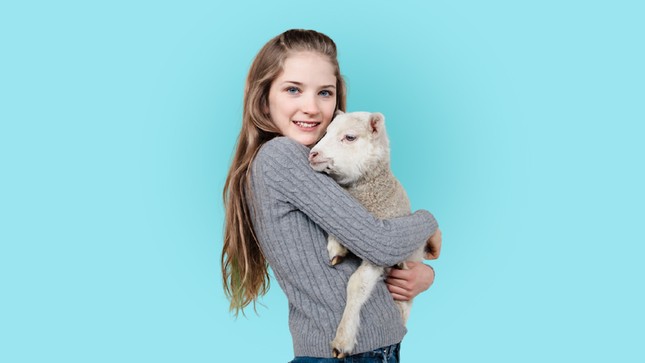
But honestly, I love it. He makes me feel like part of the flock.
Dannah: That’s actually what Psalm 100:3 reminds us of. It says:
Know that the LORD is God.
It is he who made us, and we are his;
we are his people, the sheep of his pasture.
Staci: So we’re kind of like Carl Epley—God’s sheep?
Dannah: Exactly. Every time I come into the pasture, Carl comes running because he knows me. He knows I am his source of safety . . . and the source for yummy treats. Here ya go, Carl!
[Carl crunching a treat]
Dannah: We are the same way with God. When we get to know Him, we realize that He is our source of comfort and safety. He is always faithful to care for us. In today’s verse, the psalmist is remembering who he belongs to.
Staci: Didn’t Jesus refer to himself as a shepherd?
Dannah: He did! In John 10:1–5, He provides some beautiful imagery around this! Would you read it for us, Staci? There’s a Bible in the basket.
Staci: Sure!
Here we go. This is Jesus speaking:
I tell you the truth, anyone who sneaks over the wall of a sheepfold, rather than going through the gate, must surely be a thief and a robber!
But the one who enters through the gate is the shepherd of the sheep. The gatekeeper opens the gate for him, and the sheep recognize his voice and come to him. He calls his own sheep by name and leads them out. After he has gathered his own flock, he walks ahead of them, and they follow him because they know his voice.
They won’t follow a stranger; they will run from him because they don’t know his voice.
Wow. Sheep recognizing their shepherd’s voice—that’s a powerful picture.
Dannah: It is. But to really understand what Jesus was saying here, we need to know a little about shepherds in the culture He was speaking into. Sheep weren’t just cute animals in the pasture—though Carl Epley certainly thinks he’s cute.
Back then, sheep were a family’s lifeline. They provided wool for clothing and warm blankets, milk for food, and even their skin for warmth and shelter. Families depended on their sheep to survive.
Staci: Huh! I didn’t realize how much sheep can provide! So they were like, super valuable.
Dannah: Exactly. And their value made taking care of them very important! If the sheep weren’t healthy, the family wasn’t healthy.
Because of how important they were, someone had to stay with them day and night to make sure they had good food, water, and most importantly, protection.
Staci: Wow. That’s a serious responsibility.
Dannah: You’re telling me! The shepherd stayed with them day and night to watch over and protect them. Sometimes shepherds even slept across the opening of the sheep pen.
Staci: Why would they do that?
Dannah: Well, when the shepherds did that, he would “become” the gate to the pen. Which meant, any predators that wanted to get to the sheep, had to go through the shepherd first!
Staci: Wow, he literally would lay down his life for the herd?
Dannah: Yup! He wasn’t just babysitting sheep and telling them where to eat and drink. It was dangerous work. Shepherds had to protect the flock from wild animals day and night—we’re talking wolves, lions, even bears.
Staci: Oh my!
Dannah: David actually talks about killing both lions and bears to defend his sheep in 1 Samuel. That’s how much courage and grit it took to be a shepherd.
Staci: Okay, that’s kind of scary. How were they supposed to protect themselves and the herd from major predators like that?!
Dannah: They carried a few tools. The rod was a short, heavy stick, sometimes with nails in it, used as a weapon. The staff was long, like a walking stick, and had a curved end to help guide sheep or pull them out of trouble if they got stuck. And then there was the sling—a piece of leather with strings attached. With a stone loaded inside, a skilled shepherd could hurl it at a predator with surprising speed and accuracy.
Staci: So they were like action heroes!
Dannah: In a way, yes! But they weren’t just fighters—they were caretakers.
You see, sheep are jumpy animals. A bubbling stream might look refreshing to us, but to a sheep it’s terrifying, and they won’t drink. And if the pasture was rough or dry, the whole flock could get sick. That’s why a good shepherd always searched out still waters and soft, green grass, gently leading his sheep to the safest places.
Staci: Strong and gentle. That’s such a cool mix. Now I see how it would make sense that Jesus would say “After he has gathered his own flock, he walks ahead of them, and they follow him because they know his voice.” Of course they know and trust him. They’ve watched him fight off anything trying to hurt them while also showing them where all the good snacks are!
Dannah: Exactly! That’s what made Jesus’ words so powerful. When He said, “I am the good shepherd,” everyone listening knew exactly what He meant. He wasn’t just saying He was a leader. He was saying He was the One who would fight for His people, guide them to safety, feed them, protect them, and even risk His own life for them.
Staci: Now that gives the fact that you and I get to be His sheep a whole new meaning!
Dannah: It really does! We know we can trust Jesus to tell us where to go every step of the way because we know He’s doing it to take care of us.
Staci: Just like how Carl came running when he heard your voice; He knows you’re trustworthy.
Dannah: But, he didn’t run up like this when I first got him. He had to spend time with me before he figured out I loved him and would care for him. Before he knew my voice. Kinda like us. It takes us a lot of time spent in God’s Word to learn His voice.
But when we learn it, we find that Jesus protects and guides us through all of life’s scary moments. That’s what it means to be “the sheep of His pasture.”
Staci: That’s such a comforting thought. Because sometimes, life makes me feel lost. But this verse reminds me that I’m never actually lost—I’m His.
Dannah: Now, that sounds like the ultimate reason we should be grateful. Even when things feel uncertain, we can thank God because we know who we belong to and trust who’s leading the way.
Staci: Dannah, you want to know what I think is really cool about practicing gratitude?
Dannah: What?
Staci: God knew gratitude was good for our brains! Something science today is only just catching up to it.
Dannah: I love when science provides proof for wisdom that God gave us hundreds of years ago! And you’re right, today, researchers have discovered that gratitude actually changes your brain. When you practice thankfulness, your brain releases chemicals like dopamine and serotonin—the same ones that help you feel joy and peace.
Staci: So when we stop to notice what God is doing and give Him thanks, it’s not just good for our souls—it’s actually good for our brains, too!
Dannah: Exactly. Gratitude literally rewires us to see God’s goodness more clearly.
[Carl bleats again]
Staci: Okay, Carl, we hear you. You’re very thankful for this grass.
Dannah: Wait! You know, I think Carl might actually be on to something here.
Staci: Oh, right. What if this week, just like Carl, we took the time to notice the ways God is protecting, guiding, and providing for us?
Dannah: That’s a great idea, Staci! But not just notice—actually stop and say, “Thank You, Lord.” That’s where gratitude really grows.
Staci: True Girl, how about this week you take some time with your mom each day and thank God for one specific way He’s caring for you.
Dannah: It could be something small, like “Thank You, God, for the sandwich in my lunchbox,” or something really big, like “Thank You, God, for sending Jesus to forgive my sins.”
Staci: Or something funny, like, “Thank You, God, that Frankie didn’t throw up on the carpet this time.”
Dannah: Hey, that’s gratitude in action! Because when we start paying attention, we realize God’s care shows up in all kinds of ways.
Staci: Oh wait, we could turn this into a competition! How about each day this week, you and your mom try to outdo each other in naming the ways God is caring for you. See who can come up with the most creative—or the most unexpected—thank-you.
Dannah: I love it! And don’t forget, when you’re feeling down or lost, gratitude is like a shepherd’s staff. It pulls you back gently into remembering you belong to Him.
Staci: So this week let’s practice looking around our “pastures.”
Ask yourself: What has God placed here to remind me that I’m His sheep?
Dannah: And every time you see one of those reminders, let it turn into a thank-you. That’s how we stay close to our Good Shepherd.
[Carl bleats]
Staci: Whoa—Carl just parked himself right next to me like he’s my security detail.
Dannah: That’s his way of saying you’re officially part of the flock.
Staci: I’ll take it. It’s kind of sweet knowing he trusts us that mu . . . Hey! No! I think Carl just helped himself to my sandwich. Guess it had a little less to do with trust and a little more to do with his stomach!
Dannah: Well, I suppose it’s not a pasture picnic if a critter isn’t trying to partake! If it’s not nailed down, it’s fair game.
Staci: Well, I guess that’s one way to practice gratitude. “Thank You, God, for feeding Carl with my lunch.”
Dannah: Exactly! See? You’re already living the challenge, Staci!
Claire: True Girl, gratitude grows when we remember we belong to God. You’re not just wandering alone in the world. You are His sheep, and He is your Good Shepherd.
And remember, every day this week, thank God for one way He’s caring for you. And maybe open your Bible and read Psalm 100. Today’s verse is Psalm 100:3: “Know that the Lord is God. It is he who made us, and we are his; we are his people, the sheep of his pasture.”
That’s it for today, but I hope you’ll dig deeper into God’s Word with your mom so you can get to know our Shepherd even better! If you need help knowing where to start, we have just the thing for you. It’s a box of discipleship tools that we ship out every sixty days. The True Girl Subscription box starts with a simple mom-daughter date, sixty days of devos, a coloring meditation page, and more! Ask your mom to check it out at MyTrueGirl.com.
Next week, Dannah and Staci head to a squeaky gate and talk about how gratitude opens the way into God’s presence! I hope you’ll listen in.
The True Girl podcast is produced by Revive Our Hearts, calling women of all ages to freedom, fullness, and fruitfulness in Christ.
*Offers available only during the broadcast of the podcast season.