
Meet Cheri Dobbs. Cheri serves as the Director of Women’s Ministry at Grace Church in Eden Prairie, Minnesota. Here’s how she describes her role:
Because I have a deep conviction that the Word of God must be central to everything we do, my role is to help create an environment where women are not only taught Scripture, but are equipped to understand it, apply it, and faithfully pass it on to others.
I desire for every woman to grow in her ability to engage with God’s Word personally, learn to hear His voice through Scripture, think biblically, and live in obedience. Whether through structured Bible studies, teaching environments, or discipleship opportunities, my aim is to keep Christ and His Word at the center, so women grow in both knowledge and love for Him.
Question 1: What need did you see in your church that led you to begin focusing more intentionally on true womanhood?
Cheri: As I became more involved in women’s ministry, I began to see a growing need for greater unity and clarity of purpose. While there were many good things happening, the ministry often felt fragmented: different studies operating independently, leaders with separate visions, and a sense that the “left hand didn’t know what the right hand was doing.” This made it difficult to cultivate a shared direction or to fully invest in what mattered most.
I also recognized that many women were attending and participating, but there wasn’t a clear, unified pathway for discipleship. Women studied different materials and moved in different directions, which limited opportunities for deeper connection and corporate growth. I saw a need to bring women together around the same vision so they could not only learn individually but grow collectively as a body at Grace Church.
At the same time, our Men’s Pastor began to focus on two offerings: a Bible study and Every Man a Warrior. Women’s Ministry also offered one Bible study option and True Woman classes. Because we knew our purpose and vision in women’s ministry, we knew what to offer. Several of my leaders and I wanted to see women study biblical womanhood with all the generations and to live it out in their relationships, in their homes, and within the church community.
As we focused on cultivating true, biblical womanhood in our ministry, women came out of the woodwork. It was clearly a felt need, and we could tell that God had prepared our church for this important elective.
Question 2: Why do you think churches should teach these concepts rather than assuming women will learn them on their own, and how do they fit into the overall discipleship mission of your church?
Cheri: I believe churches must intentionally teach biblical womanhood because we can no longer assume women will learn it on their own. In previous generations, many biblical ideas about gender, marriage, and relationships were reinforced at church and by culture. That is no longer the case. The current worldview has redefined what it means to be a woman, emphasizing autonomy, independence, and self-definition apart from God’s design. As a result, many women, even within the church, do not have a biblical framework for understanding their identity, roles, and relationships. These truths are no longer “caught;” they must be clearly and faithfully taught.
Because of this, biblical womanhood is not a secondary issue, it is a discipleship issue. Scripture presents men and women as equal in value but distinct in role, designed to reflect God’s glory together. When these distinctions are misunderstood or ignored, it leads to confusion about identity and brokenness in relationships, marriage, and the church. Teaching on biblical womanhood helps restore clarity, grounding women in God’s Word rather than cultural ideologies or narratives.
Studying true womanhood fits directly into the overall discipleship mission of the church because it helps women understand who they are in Christ and how to live that out in everyday life. Discipleship is not only about growing in knowledge, but about being transformed in how we think, relate, and live. Biblical womanhood shapes how a woman follows Christ, serves in the church, engages in relationships, and lives out her calling with purpose and intentionality.
It also equips women to think biblically and discern truth in a culture that often distorts or opposes God’s design. Without intentional teaching, women are left to absorb ideas from the world that subtly shape their beliefs and expectations. But when grounded in Scripture, they can recognize those influences and respond with wisdom, humility, and confidence in God’s truth.
Ultimately, teaching biblical womanhood strengthens not only individual women, but the entire church. As women grow in their understanding of God’s design, they are better equipped to disciple others, build healthy relationships, and contribute to a unified, gospel-centered community. This kind of intentional discipleship helps ensure that the next generation is not left to confusion but is firmly rooted in truth.
For these reasons, I see the teaching of true womanhood as an essential part of the church’s mission to make disciples. Teaching biblical womanhood helps women to joyfully embrace God’s good design, live under His authority, and reflect His character in every area of life.
Question 3: What changes have you seen in the women who have gone through this material, what mindset shifts have occurred, and how have their marriages or families been impacted?
Cheri: Here are some testimonies:
- “These lessons, along with True Woman 101, are truly changing the way I think. There are so many lies I’ve believed, and I’m so thankful to the Lord for drawing me near and opening my heart to receive these teachings. Coming from an abusive upbringing, my goal was always to be independent: ‘I don’t need a man’ was my mentality. Or that men are not to be trusted. These lessons have been profound, convicting, loving, and grounded in absolute biblical truth.”
- “The hardest truth for me to embrace was submitting to my husband. I see now that my desire to control my family and marriage was rooted in pride. For years, I was striving—making decisions on my own and failing to respect my husband’s leadership. In 2018, I went through True Woman 101 and it changed everything. I began to clearly see my sin, almost like Adam and Eve in Genesis 3. That same pattern was playing out in my life, and it was separating me from God and from my husband.
“But God. He showed up in a powerful way and began transforming both of our hearts. My husband started reading the Bible, and shortly after, I did too. Day by day, the Lord was renewing my mind, but I also had to learn to take every thought captive and make it obedient to Christ (2 Cor. 10:5). Even now, I still feel the urge to jump in when my husband is talking—but instead, I hold my tongue and let him finish. Rather than correcting or disagreeing right away, I’m learning to listen and respect his perspective. Praise God for making me a new creation. The old has gone, the new has come (2 Cor. 5:17).” - “There was a season in my thirties when I was really struggling, even though I was in the Word daily and praying. I knew something wasn’t right in my relationship with the Lord, but I couldn’t put my finger on it. I was constantly battling condemning thoughts—nothing specific, just a heavy weight I carried from morning to night. It affected everything including my marriage, my parenting, my relationships.
“I was exhausted in every way. I began asking the Lord for help, and He answered that prayer. I was invited to a study called Lies Women Believe, and for the first time, God began to reveal the lies I had been believing about Him and about myself. As His truth became clear, something shifted in my heart and mind. I experienced a freedom and joy I can’t fully explain. His truth set me free. Even my husband noticed a difference in me.
“Since then, God has continued to transform the way I think. I’ve learned that it’s not enough to just try to stop thinking wrong thoughts—I have to replace them with truth. I’ve had to learn to take my thoughts captive and make them obedient to Christ, and to come back again and again to His Word. I’m so grateful for what God has done. I still remember what it felt like to be in bondage to those lies, which is why I’m so passionate about helping other women experience the same freedom, fullness, and fruitfulness in Christ through True Woman classes and the book Lies Women Believe.” - “I grew up in a home marked by domestic abuse. I’m an only child, and my parents were not Christ followers. I took this class for the first time this past April–May, and it has truly changed my life.
“For the first time, I can see more clearly why there was so much brokenness in my home—the power and presence of sin in my home was constant and so was my father’s lack of leadership and protection, and my mother’s lack of understanding of biblical truth or what it means to be a soft, strong woman. God is slowly working these truths into my heart. I already feel a growing desire to be more feminine, and honestly, it feels freeing to live within His design.
“I struggle with PTSD and anxiety, but God is teaching me how to fix my eyes on Him and how to function as a soft, strong woman. I am LOVING being more feminine! For the first time in my life, I feel hopeful. I now understand what it means to be a biblical woman. I know I haven’t arrived, but I have more peace in my heart because of the changes God is making in me.” - “I had no idea how much influence feminism had on my thinking, my decisions, and the way I speak. This has opened my eyes and I am asking God to change me from the inside out.”
- “God has changed my desires. I have always been in charge, loud, and take control whether at work or in my family. But He has shown me the beauty of a gentle, quiet, soft-strong spirit that honors Him and others. I want Him to change me.”
Question 4: If a pastoral team is uncertain whether this would benefit their church, what would you say to them, and what advice would you give the woman who is met with opposition?
Cheri: If a pastoral team is uncertain whether this would benefit their church, I would encourage them not to evaluate it through the lens of culture, but through the lens of Scripture.
True Woman does operate within a complementarian framework, but that framework is not reactionary or culturally driven—it flows directly from the Genesis narrative and is reinforced throughout the New Testament. It presents a biblical vision where men and women are equal in value, yet distinct in role, rooted in God’s created design rather than shifting cultural norms.
What we have seen at Grace is that this teaching is not oppressive—it is freeing. Women consistently respond with relief and clarity as they better understand their identity and purpose. Many have expressed that they wish they had encountered this teaching earlier in life, even noting that it would have changed the trajectory of their marriages and decisions.
If a church is seeing women who are anxious, unclear about their identity, or not flourishing spiritually, this study can serve as a helpful tool. It is a deep dive into Scripture, especially Genesis, and offers a rich, theological understanding of the value and calling of women.
My encouragement to a pastoral team would be simple: take the time to look at the material carefully. Evaluate it on its biblical merit, not on assumptions or cultural concerns. And don’t be afraid to teach truth!
For the woman who is met with opposition, I would encourage her to respond with humility, patience, and respect, while remaining grounded in conviction. Invite leadership to explore the material with you. Ask thoughtful questions, listen well, and trust the Lord with the outcome.
The goal is not to win an argument, but to walk faithfully in what Scripture teaches and to trust that God works through both truth and gentleness over time. True Woman is a meaningful opportunity for women to live in alignment with their calling—to not only serve Christ, but to treasure Him and flourish within His design.
Question 5: What practical advice would you give to someone who feels called to lead women to a deeper understanding of true womanhood but doesn’t know where to start?
Cheri: I would start with the seasoned women in your church and invite them to invest in the material alongside the women they are already discipling.
- Start small and relational. True Woman doesn’t have to begin as a large program. It can start with a few women meeting in homes, walking through the material together. That’s exactly how we started.
- Leverage existing discipleship relationships. Encourage mature women to invite those they are already investing in. This allows the content to be processed in the context of a trusted relationship where they can apply the material together.
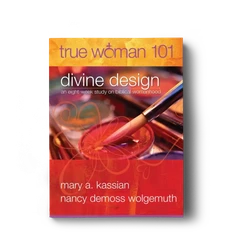
- Use the material as a tool to understand biblical womanhood. The True Woman 101 videos and content are a super helpful guide—really some of the best out there and I have read a lot on this topic. Also, real impact from the material comes through discussion, mentorship, and personal investment.
- Allow it to grow organically. Again, that is exactly how True Woman developed in our ministry. Women invited others into their homes or used the material at Grace, and it naturally spread as more women experienced its value.
- Equip women to facilitate. Many of the women who led in our ministry were not Bible scholars, but they were surrendered women willing to help guide discussion and create space for women to engage with the content.
When I came on as the Women’s Ministry Director, the material was already familiar to many women, and most had not formally taken a class. That early, relational investment made it easier to expand and implement more broadly. Starting this way removes pressure and allows the ministry to grow in a way that is both sustainable and deeply impactful.
Bonus Question! Is there anything else on this topic God has put on your heart to share?
Cheri: I love True Woman. It has honestly been life-changing for me personally. I’ve gone through both books consistently since 2017, and even my husband will say he can tell a difference in me when I’m in it—I’m softer, more grounded. It’s really something I need regularly just to come back to what is true and to be reminded of what Scripture actually says. Simple things like clothing myself with humility, conducting myself in a manner worthy of the gospel, or even voluntarily submitting to my husband—those truths don’t just stick without intentional reminder.
For me, True Woman is not about limiting women, but about grounding us in God’s design. It begins in Genesis, not in culture, and shows that men and women are equal in value but distinct in purpose—created together to reflect God’s glory and tell the story of Christ and His Church. One of the biggest things I learned was that we actually tell the gospel story through our maleness and femaleness.
In a world where women are often confused about their identity, I’ve seen this teaching bring real clarity, freedom, and stability. It doesn’t ignore pain or injustice, but it does get to the root issue: sin, not God’s design.
True Woman has helped me understand who I am in light of who God is. It calls women not merely to serve Christ but to actually treasure Him. And I’ve seen that when that happens, women really do begin to flourish within His good and intentional design.